
How to Improve Credit Score Fast: A Seasoned Expert’s Guide
When your credit score feels stuck in a rut, it’s easy to feel overwhelmed. But after decades of guiding people through their financial journeys, I've seen firsthand that making a real, noticeable difference is often simpler and faster than you might think. If you want to see a quick boost, you need to zero in on two things right now: get your credit card balances down and make every single payment on time.
These two actions pack the biggest punch because they directly influence the most important parts of your credit score. By focusing your efforts here, you could see a positive change in your score in as little as 30 to 60 days.
Your Action Plan for a Quick Credit Score Boost
Looking at a low credit score can feel like hitting a financial wall, but trust me, meaningful improvements are closer than you realize. This is your immediate action plan—no fluff, just the battle-tested strategies that deliver the fastest results. We're going to break down the core factors that scoring models like FICO and VantageScore care about most, giving you a clear roadmap for immediate impact.
Think of this as your emergency first-aid kit for credit repair. It’s a summary of the quickest ways to get things moving in the right direction, and it sets the stage for the deeper strategies we’ll explore later.
This visual guide breaks down the core principles for a fast credit boost.
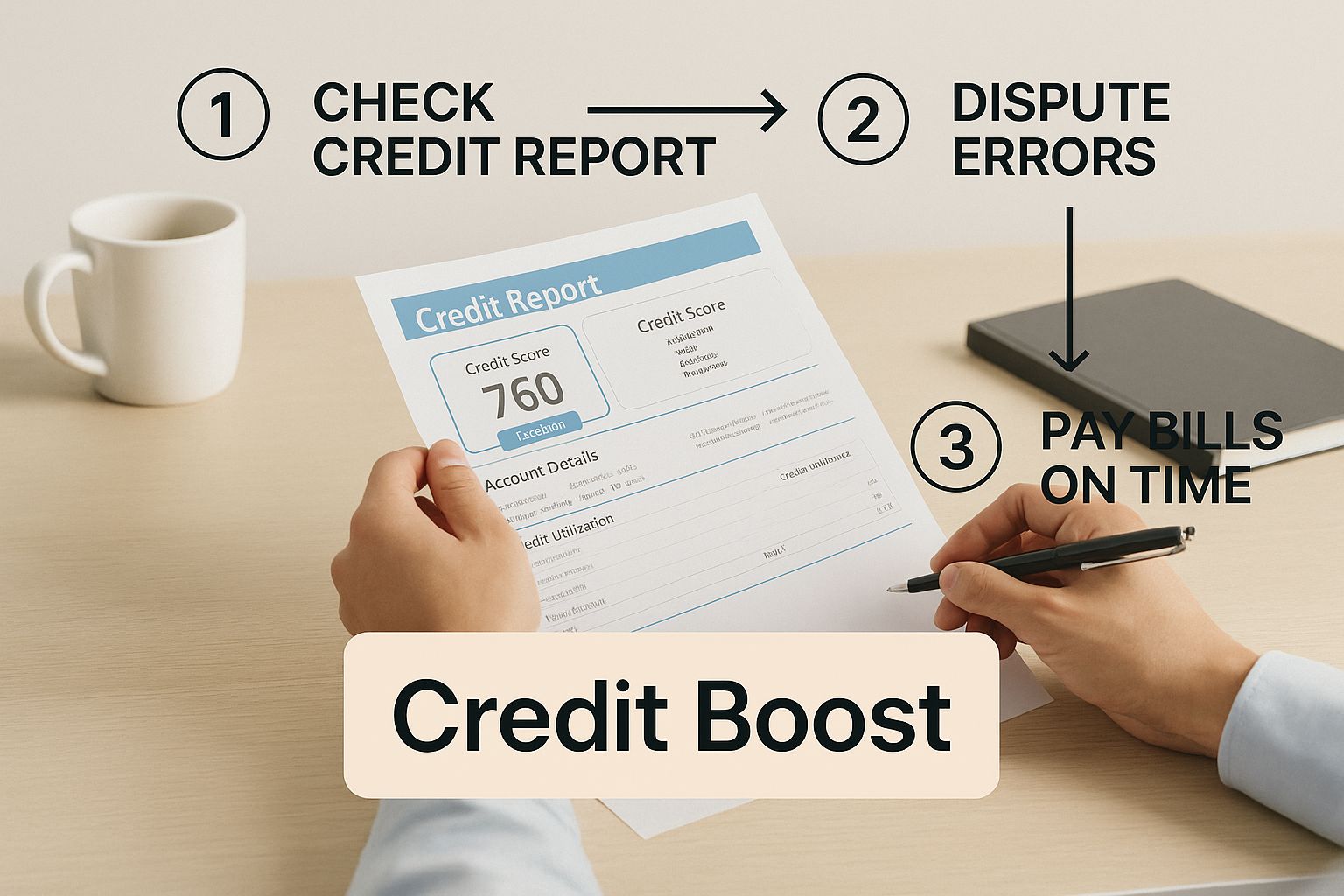
By focusing on these foundational pieces, you’re creating a direct path to a healthier credit profile.
Prioritize High-Impact Strategies
Not all credit-building tactics are created equal. For rapid results, you have to be laser-focused on what moves the needle the most. This means honing in on your payment history and, for the quickest gains, your credit utilization ratio.
Your credit utilization ratio—how much revolving credit you're using compared to your total limits—is an incredibly powerful lever. I've seen this time and time again: a key to improving your score quickly often comes down to getting this number as low as possible.
Data from Experian backs this up. The average utilization ratio is 29%, just shy of that critical 30% threshold. But here’s the telling part: people with 'Exceptional' scores (800-850) use only about 7% of their available credit. Those with 'Poor' scores (300-579)? They use a staggering 91%. The difference is night and day.
To give you a clear advantage, here's a breakdown of the most effective actions you can take right now.
High-Impact Actions for Fast Credit Improvement
Focus on these effective strategies to see potential improvement in your credit score within the next 30-60 days.
| Action | Why It Works So Fast | Potential Impact |
|---|---|---|
| Pay Down Credit Card Balances | Credit utilization is reported monthly. A lower balance can improve your score as soon as the next statement cycle. | High |
| Make All Payments On Time | Payment history is the most significant factor (35%) in your FICO score. Every on-time payment helps. | High |
| Become an Authorized User | You inherit the positive history of an established account, which can quickly lower your overall utilization. | Medium to High |
| Dispute Credit Report Errors | Removing an incorrect negative mark (like a late payment) can provide an immediate score boost. | Varies |
These strategies are your frontline defense and your fastest path to a better score.
Create a Clear Path Forward
Building good credit is a fundamental step toward your biggest financial goals. For many people I talk to, that means figuring out how to buy a house with bad credit, and a strong credit score is the absolute foundation for that journey. A higher score unlocks better interest rates and more favorable loan terms, saving you thousands.
Expert Takeaway: The single fastest way to see a score increase is by paying down credit card balances. Since card issuers typically report balances to the credit bureaus once a month, a lower reported balance can boost your score in as little as 30 days.
Even with a rocky history, you have options. Understanding the landscape of bad credit personal loans can give you a way to consolidate high-interest debt or manage an emergency while you're actively working on your score. It’s all about taking back control of your financial story, one strategic move at a time. The next sections will walk you through exactly how to do it.
Master Your Payment History for Immediate Gains
If you're looking for the single biggest lever you can pull to boost your credit score—and fast—this is it. Your payment history is the undisputed heavyweight champion of credit score factors, making up roughly 35% of your FICO score. Just one missed payment can send your score tumbling.
This isn't just about trying to remember to pay on time. It's about creating a system so bulletproof that late payments become a complete non-issue. Think of it as putting the most important part of your credit score on autopilot.
Create a Bulletproof Payment System
The easiest, most effective way to guarantee you're never late is to automate everything. Go into every one of your credit accounts right now and set up automatic payments for at least the minimum amount due. This is your safety net. It ensures a due date never slips your mind and you never get dinged with a late fee or a negative mark.
For bills with amounts that change each month, like credit cards or utilities, calendar alerts are your best friend. I personally set two reminders for every major bill—one a week out, and another two days before the due date. The first is a heads-up, and the second is my "no excuses, get it paid" final reminder.
A Pro Tip From Experience: This simple two-alert system has saved me from costly oversights more times than I can count. It takes five minutes to set up and can protect your score for years.
Understand the Impact of Late Payments
Not all late payments hit your credit report, but any delinquency is bad news. A payment only gets reported to the credit bureaus once it's officially 30 days past its due date. A 30-day late mark can haunt your report for a full seven years.
If that slip-up extends to 60 or 90 days, the damage gets exponentially worse, signaling a major red flag to lenders. This is why having a clear handle on how loans work and managing debt is so fundamental to your financial health.
Recent data from FICO's own research highlights just how critical this is. Their FICO Score Credit Insights report shows that while people are carrying more credit card debt, those who consistently prioritize their core payments (like mortgages and auto loans) are the ones seeing their scores improve.
Prioritizing Payments When Money Is Tight
What happens when you can't pay everything? You have to get strategic. Here's the game plan I've seen work time and again for people in a tough spot:
- Secured Debts First: Your mortgage and car loan always come first. Period. These are tied to collateral—your house and your car—and missing these payments can lead to foreclosure or repossession.
- High-Interest Credit Cards: After your secured debts are covered, attack the credit card with the highest interest rate. This is the one costing you the most money every single month.
- Personal Loans and Other Installments: These come next. Prioritize them based on their interest rates and terms.
By getting your payment history under control, you are taking direct command of the most influential piece of your credit score. This is where rapid, meaningful improvement begins.
Lower Your Credit Utilization for a Rapid Score Increase
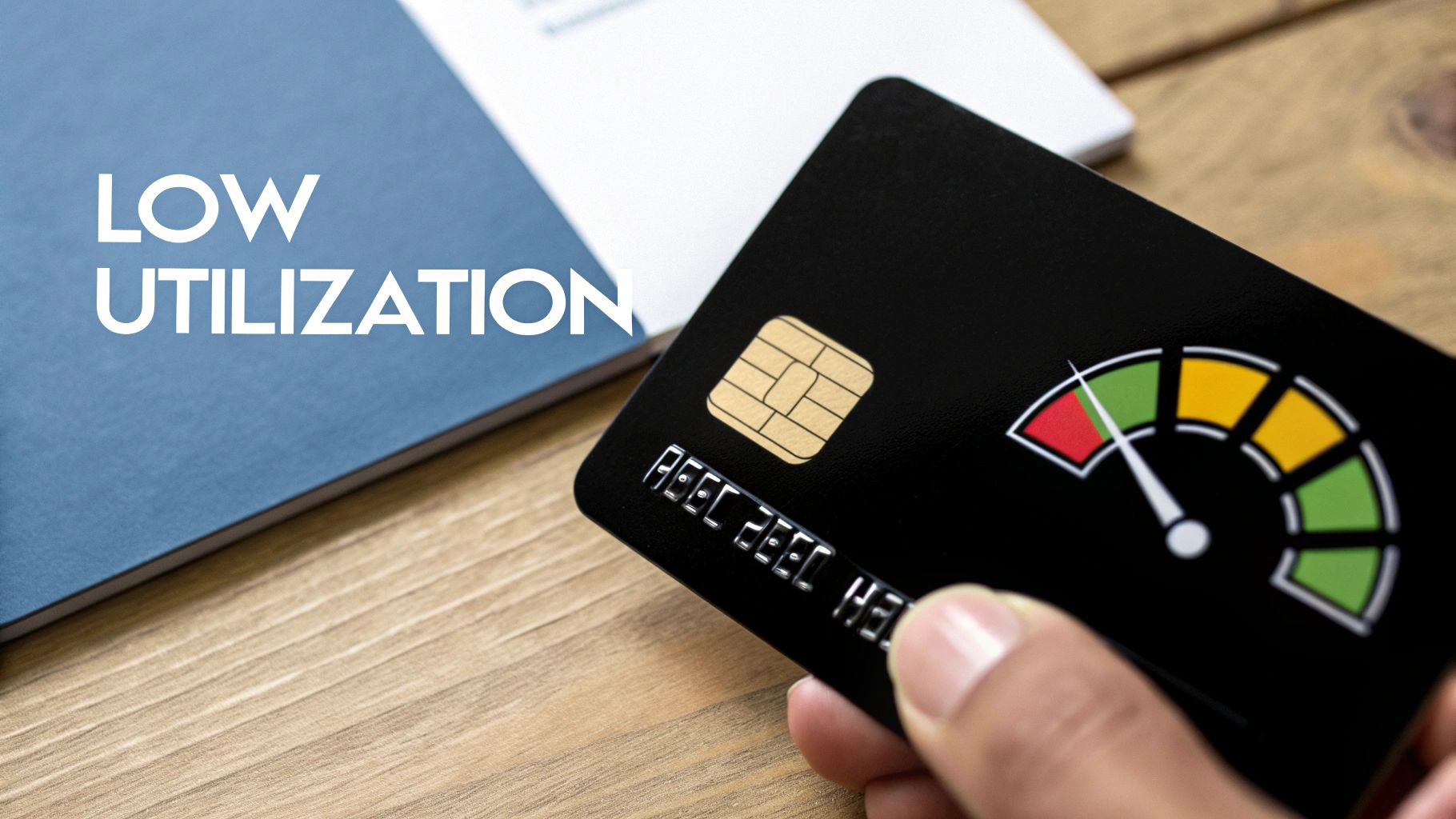
If on-time payments are the foundation of your credit score, then your credit utilization ratio (CUR) is the accelerator. It’s the second biggest piece of the credit score pie, right after payment history. From my experience, tackling this one factor is often the single fastest way to see a meaningful jump in your score, sometimes in as little as 30 days.
So, what is it? Your CUR is simply how much revolving credit you’re using compared to your total credit limit. Imagine you have one credit card with a $5,000 limit and a $2,000 balance. Your utilization is 40%. Easy as that.
Lenders pay close attention to this number because a high CUR can be a red flag. It suggests you might be relying too heavily on credit to get by. A low CUR, on the other hand, tells them you manage your finances responsibly without maxing out your accounts.
The Golden Rules of Utilization
You’ve probably heard the standard advice: keep your utilization below 30%. That’s a decent starting point, but it's not the whole story. The clients I've worked with who have the absolute best scores—we're talking 800-plus—consistently keep their utilization in the single digits.
The real sweet spot is below 10%. That’s where you show lenders you're actively using credit, but you definitely don't depend on it.
Here’s how you can start chipping away at that number:
- Pay Down Balances Aggressively: This is the most straightforward method. Target the credit cards with the highest utilization percentages first. Knocking down the balance on a card that's at 80% utilization will have a much bigger impact than paying down one that's at 20%.
- Make Mid-Cycle Payments: This is a pro-level tip. You don't have to wait for your statement to arrive. By making a payment before your statement closing date, you can ensure a lower balance gets reported to the credit bureaus. It’s a powerful, quick-win tactic.
Strategic Ways to Lower Your Ratio
Beyond just throwing money at your debt, there are some clever ways to adjust the math in your favor. These moves take a bit more planning but can deliver a serious boost.
One of the most effective strategies is simply asking for a credit line increase on your existing cards. If you've had a recent pay raise or have a long, solid history with that lender, there's a good chance they'll approve it. This move instantly lowers your CUR without you paying a dime. Using our earlier example, if your $5,000 limit gets bumped to $10,000, that same $2,000 balance now represents just 20% utilization instead of 40%.
Expert Insight: Before you request a credit limit increase, always ask the card issuer if it will trigger a "hard" credit inquiry. A hard pull can temporarily knock a few points off your score, so you want to know what their process is beforehand.
Another smart play is to become an authorized user on a trusted family member's credit card. This only works if that person has a fantastic credit history—think long account age, flawless payments, and super-low utilization. Their high credit limit gets added to your overall available credit, which can slash your CUR and give your score a quick lift.
Manage Your Debt and Credit Mix Strategically
It's easy to get hyper-focused on on-time payments and credit utilization—and you should—but there's another layer to building a truly impressive credit score: your credit mix. Scoring models are designed to reward people who can responsibly manage different types of credit. Frankly, it shows you can handle the financial curveballs life throws your way.
Lenders feel more confident when they see a healthy blend of two main credit types on your report:
- Revolving Credit: Think of your credit cards and lines of credit. You can borrow, repay, and borrow again, all up to a specific limit. It's flexible debt.
- Installment Loans: This is structured debt with a clear finish line. Mortgages, auto loans, and personal loans all fall into this category, with fixed payments over a set term.
Having both shows you’re a well-rounded borrower. It signals you can handle both the discipline of a long-term loan and the flexibility of a credit card without getting into trouble.
Why Closing Old Accounts Can Backfire
Here’s a common mistake I see people make. They get organized, pay off an old credit card, and immediately close the account to "clean things up." While the intention is good, this move can often hurt your score.
Closing an account, especially one you've had for a long time, chops down the average age of your credit history. Length of credit history is a significant scoring factor, so those seasoned accounts are valuable assets. Keeping them open works in your favor.
Plus, when you close a card, you lose its credit limit. This instantly reduces your total available credit, which can make your credit utilization ratio jump up—another key factor. Unless a card has an outrageous annual fee, it’s usually best to keep it open. Just use it for a small purchase every few months to keep it active, and pay it off right away.
A Word of Caution: The instinct to "clean up" your credit by closing old cards is a common mistake. Protecting the age of your credit history is a long-term play that pays off by showing lenders a lengthy track record of responsible behavior.
Using Debt Tools to Your Advantage
Don't just let your debt sit there—actively manage it. Refinancing high-interest debt into a new loan with a lower rate is a classic move that improves your entire financial picture. It's not just about lowering your monthly payments; it also helps your debt-to-income ratio, a metric lenders watch like a hawk.
As noted in Equifax’s Global Credit Trends report, consumers often rush to refinance when interest rates are low, locking in better terms to get their balances under control. You can see how people capitalize on these trends in the Equifax global report.
Consolidating debt is another powerful strategy. Picking the right tool for the job is key. Below is a quick look at a few common strategies and how they typically impact your score.
Comparing Debt Management Strategies
This table breaks down a few popular debt management techniques and their effects on key credit score factors.
| Strategy | Primary Benefit | Effect on Credit Utilization | Effect on Payment History |
|---|---|---|---|
| Balance Transfer Card | Moves high-interest card debt to a 0% intro APR card. | Can significantly lower utilization on original cards. | Streamlines payments into one, making it easier to stay on time. |
| Personal Loan | Consolidates multiple debts into one fixed-rate loan. | Pays off revolving balances, drastically cutting credit utilization. | Creates a single, predictable monthly payment, simplifying your budget. |
| Debt Management Plan | Works with a credit counseling agency to lower rates. | Can involve closing accounts, which may raise utilization initially. | Consistent payments to the agency build a positive payment history. |
| Home Equity Loan/HELOC | Uses home equity for a low-interest loan to pay off debt. | Pays off revolving debt, which dramatically lowers utilization. | Establishes a new installment loan with a clear payment schedule. |
Each path has its pros and cons, but the goal is the same: simplify your payments, lower your interest costs, and put yourself in a stronger financial position.
Deciding between a balance transfer card and a personal loan is a common dilemma. Both are great options depending on your specific situation. Our guide on choosing between a balance transfer or personal loan breaks down which one might be the best fit for you.
By actively managing your debt structure, you're doing more than just saving money on interest—you're strategically sculpting a stronger, more attractive credit profile.
Find and Dispute Errors on Your Credit Report
What if the biggest thing dragging your score down is a mistake you don't even know about? It's a frustrating but surprisingly common reality. Inaccuracies pop up on credit reports all the time, and they can do some serious damage.
The good news? Finding and removing even a single incorrect negative item can give you one of the fastest and most significant boosts to your credit score. This isn't about gaming the system; it's about making sure your report is a fair and accurate reflection of your history. Federal law is on your side, giving you a clear path to get things fixed.
How to Get Your Free Credit Reports
First things first, you need to get your hands on your reports. You're entitled to free weekly reports from all three major credit bureaus—Experian, Equifax, and TransUnion—and there's only one federally authorized place to get them.
Head over to AnnualCreditReport.com. This is the official source.
This is the official government-mandated site for your free reports. It's the only place you should go to pull them without cost or consequence.
Pulling your reports from this site is a soft inquiry, which means it has absolutely zero impact on your credit score. Make a habit of checking in regularly to catch potential issues before they become bigger problems.
What to Look For When Reviewing
Once you have the reports, it's time to play detective. Go through each one, line by line. Don't just skim it. You're searching for anything that looks even slightly off.
Here's a quick checklist of common errors to watch for:
- Incorrect Personal Information: Misspelled names, old addresses you don't recognize, or a wrong Social Security number.
- Accounts That Aren't Yours: This is a massive red flag for identity theft. Look for credit cards, loans, or other accounts you never opened.
- Inaccurate Account Status: See a payment marked late that you know you paid on time? Or a closed account that's still showing as open? Flag it.
- Duplicate Accounts: Sometimes a single debt can get reported twice by mistake, doubling its negative impact on your score.
- Outdated Negative Information: Most negative items, like late payments or collections accounts, have to be removed after seven years. Make sure old blemishes aren't still hanging around past their expiration date.
The Disputing Process
If you spot an error, the next step is to file a formal dispute with the credit bureau that's reporting it. The bureaus have a legal obligation—usually 30 to 45 days—to investigate your claim with the creditor who provided the information. They must either correct the error or verify that the information is accurate.
Expert Tip: When you file a dispute, do it in writing and send it via certified mail with a return receipt requested. This creates a paper trail. Clearly explain the error, include copies (never send your originals) of any proof you have, and keep a detailed record of everything for your own files. This holds everyone accountable and gives you proof of your efforts.
Your Top Credit Score Questions, Answered
Alright, we've covered the core strategies, but I know you probably have some specific questions bubbling up. These are the exact kinds of real-world "what ifs" that my clients ask me every day as they start putting these plans into action.
Let's treat this last section like a final sit-down. My goal is to clear up any lingering confusion so you can walk away from this guide feeling 100% confident and ready to get started.
How Quickly Can I Realistically See a Higher Score?
Believe it or not, you can start seeing positive changes in as little as 30 to 45 days. The quickest wins almost always come from two specific moves: attacking high credit card balances to slash your credit utilization and successfully getting an error removed from your report.
Creditors typically report your account status to the bureaus just once a month. So, any good news—like a much lower balance—will show up in the next reporting cycle. In the same way, fixing a major mistake, like a collection account that never belonged to you, can give your score a serious jump as soon as the credit bureau processes the correction.
Is It Better to Pay a Card Off or Leave a Tiny Balance?
This is one of the most stubborn credit myths out there, so let's clear it up for good. From a purely financial perspective, you should always pay your credit card balance in full every single month. Don't pay a single penny in interest if you don't have to.
When it comes to your credit score, what really matters is the balance that gets reported to the credit bureaus. As long as that number is low (ideally under 10% of your limit), your score will get a boost. There is absolutely zero scoring advantage to carrying debt and paying interest. Just using the card and paying it off is all the positive activity you need to show.
Will Closing an Old Credit Card Hurt My Score?
In most cases, yes. This is a common mistake I constantly steer clients away from, and it can ding your score in two big ways.
- It cranks up your credit utilization ratio. When you close the account, you instantly lose its credit limit from your total available credit. This can make your overall utilization percentage shoot up, which looks risky.
- It can drag down the average age of your accounts. That old card is a valuable part of your credit history's length. Once it’s closed, it will eventually fall off your report, which could shorten the average age of your credit history—a key scoring factor.
My Two Cents: Unless the card has a ridiculously high annual fee you can't justify, it’s almost always better to keep it open. Just use it for a small purchase every few months to keep it active, and then pay the balance off right away.
How Badly Does a Single Late Payment Hurt?
A single 30-day late payment can hit your score like a ton of bricks, and the impact is immediate. For someone with a good score, it’s not unheard of to see a drop of 60 to 110 points. The higher your score is, the harder it tends to fall.
While that sting does fade over time, the late payment will stay on your credit report for a full seven years. If you have an otherwise perfect payment record, it is absolutely worth calling your creditor to ask for a "goodwill adjustment." If it's your first slip-up, they just might agree to remove the negative mark once your account is paid up.
Do Credit-Building Tools Like Secured Cards Actually Work?
Yes, they are incredibly effective tools. They're especially powerful for anyone with a "thin file" (meaning you don't have much credit history) or for those who are rebuilding after some financial missteps. A secured credit card is one of the best ways to get started.
Here’s how it works: You put down a cash deposit which then becomes your credit limit. This takes the risk away from the lender. When you use it for small, everyday purchases and make every single payment on time, you're building a track record of responsible credit behavior. The bank reports all this good activity to the credit bureaus, helping you build the positive history you need to qualify for traditional cards and loans down the road.
What is the quickest way to raise my credit score?
The fastest way to potentially see a score increase is by paying down the balances on your revolving credit accounts, like credit cards. This directly lowers your credit utilization ratio, a major scoring factor that is updated monthly.
How long does it take to improve your credit score?
You can see improvements in as little as 30 to 60 days if you focus on high-impact actions like paying down balances or correcting errors. Building an excellent score takes longer, as factors like payment history and account age require months and years of consistent, positive behavior.
Is it possible to increase my credit score by 100 points quickly?
While not guaranteed, a 100-point increase is possible, especially if your starting score is low. This typically requires significant action, such as paying off a large amount of credit card debt to slash your utilization or successfully disputing a serious error like a collection account or bankruptcy that was incorrectly reported.
Does paying off a loan in full improve my credit score?
Paying off an installment loan like a personal or auto loan is a positive financial move, but it may not cause a big, immediate jump in your score. While it shows you can manage debt, it also closes an active account. The most significant score impact comes from managing your revolving credit (credit cards) effectively.
What is the 30% rule for credit?
The 30% rule is a common guideline suggesting you should keep your credit utilization ratio—the amount of credit you're using compared to your total limit—below 30%. While 30% is a good maximum, people with the highest credit scores often keep their utilization below 10%.
At ShopRates, our mission is to give you the knowledge and tools you need to take charge of your financial life. Whether you’re working towards a better mortgage rate, a personal loan, or just the peace of mind that a great credit score brings, we're here to help you compare your options. Explore your lending choices with confidence at ShopRates.com.


