Equipment Financing for Small Business: A Complete Guide
When you’re staring down a quote for essential machinery or high-tech gear, that sticker price can feel overwhelming—especially when cash flow is already stretched. Equipment financing for small business is not just another expense; it’s a strategic investment in growth. By turning a large upfront cost into predictable monthly payments, you preserve working capital for payroll, inventory, and expansion. In this guide, we’ll explore the best equipment financing options for small business owners, from fundamental concepts to advanced strategies, so you can make informed decisions and accelerate your company’s trajectory.
Think of equipment financing like a car loan for your business: you drive off the lot with the asset in hand, and you pay it off over time as it helps you earn revenue. But unlike an auto loan, small business equipment financing can come with specialized structures—equipment leases, sale-leaseback arrangements, vendor financing, SBA-backed loans, and more. We’ll walk through each avenue, explain the pros and cons, and share real-world examples. Along the way, you’ll learn how to compare equipment leasing vs buying, qualify with bad credit, and leverage tax incentives like Section 179. Ready to optimize your capital structure and choose the ideal equipment finance path? Let’s get started.
What Is Equipment Financing and How Does It Work?
Equipment financing is a form of secured business loan in which the equipment itself serves as collateral. Instead of dipping into savings or taking on a high-interest credit card balance, you partner with a lender who fronts the purchase cost. You then repay the loan—or lease—over a fixed term, unlocking the asset’s productive value immediately.
Key benefits of equipment financing for small business include:
• Access to high-end machinery without a crippling one-time outlay.
• Predictable, often tax-deductible monthly payments.
• Potential to build equity (with loans) or stay agile (with leases).
• Financing flexibility even for startups or businesses with weaker credit profiles.
Before diving deeper, you may want to review our how loans work article for foundational definitions. Or, if you’re ready for the full breakdown, explore this complete guide to equipment financing for small businesses to see crowd-tested tips and lender comparisons.
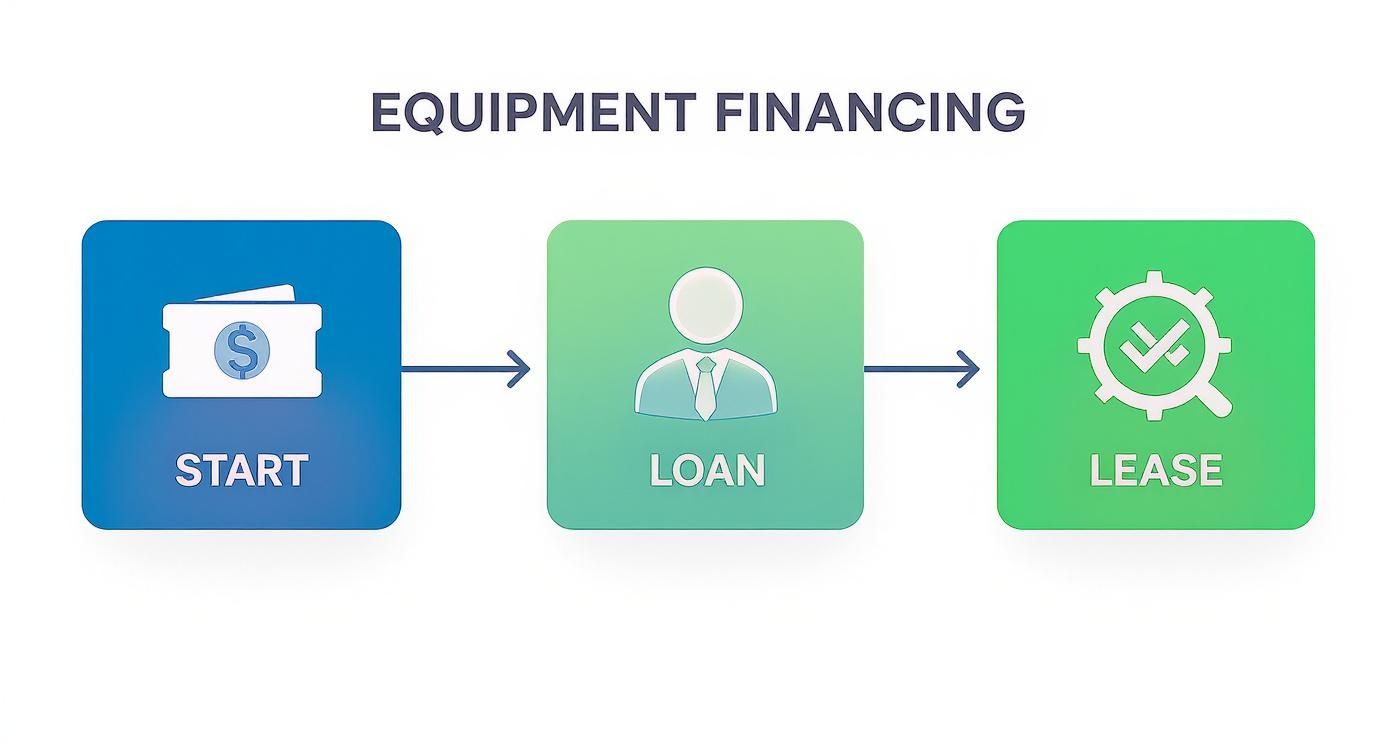
Two Main Pathways to Acquiring Equipment
-
Equipment Loan
- The borrower receives funds, purchases the asset, and owns it from day one.
- You make principal-plus-interest payments over the term; final payment grants clear title.
- Ideal for long-lived machinery and when you want to build equity.
-
Equipment Lease
- Functionally a long-term rental. You pay for the equipment’s depreciation plus a financing fee.
- At lease-end, choose to return, renew, or purchase the asset at its residual value.
- Best for rapidly evolving tech or if you prefer off-balance-sheet financing.
Turning a steep capital expense into a manageable monthly cost frees up capital for growth. Use this tactic to preserve cash reserves and reduce the risk of depleting operational budgets.
Choosing Your Path: Equipment Loans Versus Leases
Should you finance or lease? That depends on your business objectives, financial priorities, and the pace of innovation in your industry. Below is a deeper dive into each model, plus a quick “compare equipment leasing vs buying” table.
The Ownership Model: Equipment Loans
With an equipment loan:
• You qualify based on credit and cash flow, then receive funds to buy.
• The lender files a UCC lien; once repaid, the lien is released, and you hold title.
• You reap tax benefits like depreciation and interest deductions.
• You can modify or customize the equipment without restrictions.
Equipment loans make sense for heavy machinery, production lines, vehicles, and durable assets with predictable lifespans. For example, a printing company financing a $150,000 press can claim depreciation deductions over several years, reducing taxable income and maximizing ROI.
The Flexibility Model: Equipment Leases
Equipment leases offer:
• Lower monthly payments, since you’re financing only the expected depreciation.
• Off-balance-sheet treatment (operating leases) that keeps debt ratios low.
• Scheduled upgrades, avoidance of obsolescence, and easy scaling.
A graphic design firm might lease high-performance workstations on a three-year cycle. As each lease ends, they swap to the latest hardware—even if the monthly outlay remains similar. This tactic supports ongoing competitiveness and removes the hassle of reselling outdated equipment.
Equipment Loan vs. Equipment Lease: A Head-to-Head Comparison
| Feature | Equipment Loan (Ownership) | Equipment Lease (Flexibility) |
|---|---|---|
| End Goal | Own the asset free and clear. | Use the asset; option to return, renew, or buy at end. |
| Monthly Payments | Higher, covering principal + interest. | Lower, covering depreciation + financing fee. |
| Upfront Costs | Often a down payment (10–20%). | Sometimes first & last month, with no down required. |
| Balance Sheet | Asset & liability appear on books. | Operating leases can keep liabilities off the balance sheet. |
| Tax Treatment | Depreciation + interest are deductible. | Lease payments fully deductible as operating expenses. |
| Customization | Full freedom to modify. | Customization usually restricted. |
| Obsolescence Risk | You bear the risk if equipment becomes outdated. | Lessor bears obsolescence; easy upgrade path. |
| Best For | Long-life assets (manufacturing, vehicles). | Rapidly evolving tech (IT, medical devices). |
There’s no universal “best” choice—only the right match for your cash flow, tax goals, and operational timeline. To compare deeper, check our equipment leasing versus buying guide.
How to Qualify for Small Business Equipment Financing
Securing equipment financing for startups, businesses with imperfect credit, or those seeking specialized manufacturing gear starts with understanding lender criteria. Because the financed equipment serves as collateral, qualification thresholds are often more lenient than for unsecured loans. Lenders focus on two pillars: your ability to repay and the collateral’s value.
Core Qualification Criteria for Lenders
- Credit Profile
– Personal and business scores; ideal range 650+, but many lenders accept down to 550 for strong revenue histories. - Time in Business
– Traditional lenders prefer 2+ years; alternative and online lenders may consider 6 months of operations. - Annual Revenue
– A typical benchmark is $100,000–$250,000 in yearly revenue. Strong, consistent cash flow is paramount. - Equipment Type & Condition
– New or lightly used standard equipment has predictable resale value and higher approval odds.
Assembling Your Application for Success
Preparation accelerates funding. Gather documents before applying to transform a weeks-long review into days:
• Completed application form (business info & funding request).
• Detailed equipment quote listing make, model, condition, and total cost.
• Three to six months of bank statements.
• Profit & loss statement and balance sheet (for larger amounts).
• Two years of business & personal tax returns (for banks).
When lenders see a polished, complete file, they process your request faster—saving you time and preserving your negotiating leverage.
Strategies for Newer Businesses or Weaker Credit
Equipment financing for startups with bad credit is possible. Lenders look for compensating factors:
• Down Payment (10–20%) to demonstrate commitment.
• Additional Collateral such as real estate or paid-off equipment.
• Strong Business Plan with clear revenue projections.
• Personal Guarantees if necessary, to reassure banks.
Also, explore multiple funding paths. See our ultimate guide to small business funding options in 2025 for complementary credit lines, merchant cash advances, and factoring solutions.
Understanding Your Equipment Financing Rates and Terms
Choosing equipment financing rates for startups or established firms isn’t just about the advertised interest rate. To compare offers fairly, you must decode APRs, factor rates, amortization schedules, and hidden fees.
Decoding the Numbers on Your Loan Offer
- Annual Percentage Rate (APR): The all-in yearly cost, including interest and most fees. This metric provides an apples-to-apples comparison.
- Factor Rate: Common in short-term deals. A factor rate of 1.15 means you’ll repay 1.15 × loan amount (e.g., $50,000 × 1.15 = $57,500).
- Amortization Schedule: A payment roadmap showing each installment’s principal vs. interest breakdown. It reveals how quickly you’ll build equity.
A low sticker rate may disguise steep origination or documentation fees. Always verify the APR before committing.
Shining a Light on Potential Hidden Costs
Even transparent lenders may have ancillary charges. Clarify these line items before signing:
• Origination Fees: 1–5% of loan amount.
• Prepayment Penalties: Fees if you pay off early.
• Late Payment Fees: Standard penalties for missed deadlines.
• UCC Filing or Document Fees: Administrative costs for lien filings.
For a deeper dive into financing cost components, check our business loan interest rates guide, which compares typical fee structures across lenders.
Alternative Equipment Financing Solutions
While traditional loans and leases dominate, small business owners should also consider:
- Vendor Financing: Some manufacturers and dealers offer in-house financing or partner rates that can simplify the process.
- Sale-Leaseback: Sell existing owned equipment to a third party and lease it back, freeing up capital while retaining use.
- Lines of Credit: Revolving credit secured by equipment or receivables can fund multiple purchases over time.
- Equipment Finance Companies: Specialized lenders focused exclusively on equipment, often with faster approvals and sector expertise.
- Crowdfunding or Peer-to-Peer Lending: Niche platforms that may fund unique or custom machinery projects.
Leveraging Government Programs and Tax Incentives
Small business equipment financing can be supercharged by federal and state incentives:
- Section 179 Deduction: Immediately write off the full purchase price of qualifying equipment (up to annual limits) in the year placed in service.
- Bonus Depreciation: Allows 100% first-year depreciation on new or used equipment through certain tax years.
- SBA 7(a) & 504 Programs: The Small Business Administration partially guarantees loans for equipment acquisition, offering multi-year terms and competitive rates.
- State and Local Grants: Some states provide equipment vouchers, low-interest loans, or matching funds for specific industries (manufacturing, agriculture, healthcare).
Consult your CPA to maximize savings. These incentives can transform a financing package, improving cash flow and project ROI.
Your Step-by-Step Guide to the Application Process
When you break the equipment financing journey into four stages, it becomes a clear checklist—not a maze. Follow these steps to secure funding rapidly and efficiently.
Stage 1: Gather Your Financial Documents
Before you hit “apply,” assemble:
- Bank Statements (3–6 months).
- Profit & Loss Statement & Balance Sheet.
- Business & Personal Tax Returns (2 years).
- Business Licenses & Registration Documents.
Stage 2: Obtain an Official Equipment Quote
Secure a detailed invoice from the vendor, showing:
- Exact make, model, year, and condition.
- Itemized price: base cost, taxes, delivery, installation.
- Warranty details, if any.
Stage 3: Identify the Right Lender
Match your business profile to lender types:
- Traditional Banks: Best rates for established firms & strong credit.
- Online Lenders: Rapid approvals, flexible criteria, equipment financing application process small business optimized.
- Credit Unions: Personalized service for local businesses and associations.
- Equipment Finance Companies: Sector-specialists with streamlined underwriting.
Stage 4: Submit and Finalize Your Application
Use completed documents to fill the lender’s portal or application. Be responsive to follow-up requests. Upon approval:
- Review terms carefully (APR, term length, fees).
- Sign and return documents.
- Lender pays vendor directly.
- Equipment ships—your business is ready to grow.
Top Tips and Best Practices for Equipment Financing
- Compare Multiple Quotes: Leverage at least three offers to unlock competitive rates.
- Negotiate Fees: Ask lenders to waive or reduce origination and documentation charges.
- Optimize Term Length: Balance lowest monthly payments against total interest costs.
- Lock Rates Early: If market rates are rising, secure your APR with a rate lock.
- Use Financing as a Benchmark: Track financed assets separately for ROI analysis.
How to Use Equipment Financing as a Strategic Growth Tool
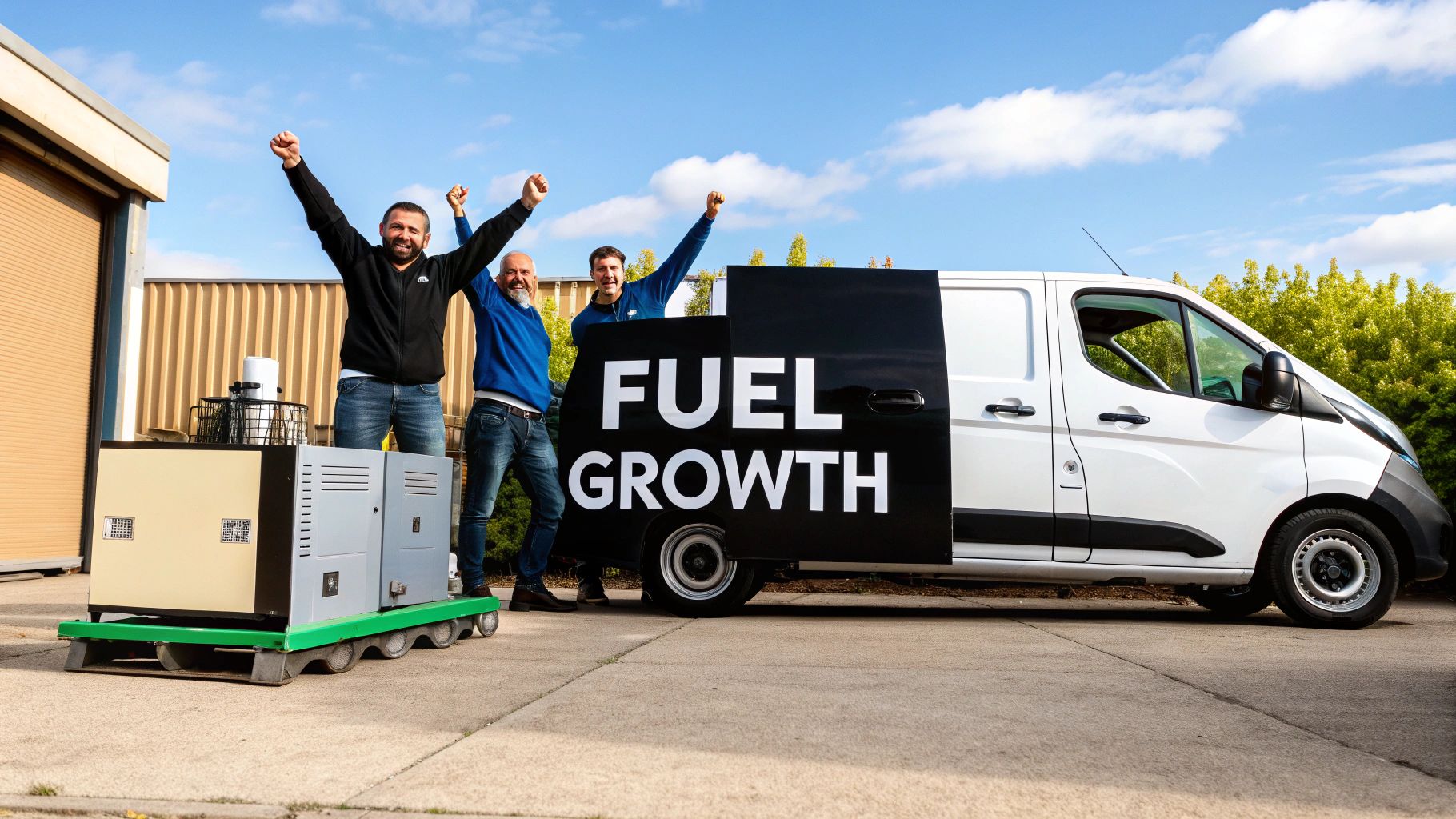
Savvy owners view equipment financing not as a purchase, but as a lever for efficiency, scalability, and competitive advantage. By reframing monthly payments as investments, you unlock new capacity, improve service levels, and preserve liquidity.
Keep Your Working Capital Free and Agile
With predictable lease or loan payments, you avoid tying up cash in depreciating assets. That preserved capital can:
- Fund marketing campaigns that drive sales.
- Hire skilled operators or technicians.
- Stock inventory at volume discounts.
Gain a Competitive Edge and a Tax Advantage
Cutting-edge machinery often delivers:
- Higher throughput and faster cycle times.
- Lower energy consumption and maintenance expenses.
- Enhanced product quality, leading to premium pricing.
With Section 179 and bonus depreciation, you can dramatically reduce taxable income in year one. For example:
Equipment Cost × Section 179 Deduction = Immediate Tax Savings
A $200,000 purchase could yield up to $200,000 in first-year write-offs, depending on current IRS limits.
This strategic combo of operational and fiscal benefits drives long-term growth, as evidenced by the U.S. equipment finance industry’s 3.1% volume increase in 2024, reaching $1.3 trillion.
Common Questions About Small Business Equipment Financing
1. What Is Equipment Financing for Small Business?
Equipment financing for small business is a secured loan or lease arrangement where the equipment you purchase or lease serves as collateral, enabling you to spread payments over time and preserve cash for operations.
2. How Do I Compare Equipment Financing vs Leasing for Small Business?
Compare total cost of ownership, tax treatment, balance sheet impact, and upgrade flexibility. Use APR for loans and determine depreciation versus residual value for leases.
3. Can I Get Equipment Financing with Bad Credit?
Yes. Online lenders and equipment finance companies often approve scores as low as 550 if you provide a down payment, demonstrate solid revenue, or offer additional collateral.
4. What Are the Typical Equipment Financing Rates for Startups?
Rates vary by lender and business profile. Startups may see factor rates from 1.15 to 1.30 or APRs in the mid-teens, compared to established firms at single-digit APRs.
5. How Quickly Can I Get Approved and Funded?
• Online lenders: 24–48 hours from approval.
• Banks/SBA loans: 4–8 weeks.
Preparation and complete documentation accelerate timelines.
6. Is a Down Payment Always Required for Equipment Loans?
Not always. Many lenders offer 100% financing for qualified businesses. Down payments of 10–20% may be requested for startups, weaker credit, or specialty equipment.
7. Can I Finance Used Equipment for My Business?
Absolutely. Used equipment with a clear valuation can be financed, though terms may include shorter loan tenors or slightly higher rates to account for depreciation uncertainty.
8. What Documents Do I Need to Apply for Equipment Financing?
• Business bank statements (3–6 months)
• Profit & loss statement and balance sheet
• Business & personal tax returns (2 years)
• Equipment quote/invoice and business registration documents
9. How Do Section 179 and Bonus Depreciation Work with Equipment Financing?
Section 179 allows you to deduct the full cost of qualifying equipment up to annual limits in the year placed in service. Bonus depreciation enables 100% write-off of new or used equipment under current tax law.
10. Which Lenders Specialize in Equipment Financing for Small Businesses?
• Traditional banks (with SBA 7(a)/504)
• Credit unions offering member-centric deals
• Online equipment finance companies (rapid approvals)
• Vendor financing programs through manufacturers
By following this comprehensive guide—covering everything from basic definitions to advanced tax strategies—you’re well-equipped to navigate equipment financing for small business, compare rates and terms, and harness loans or leases as true growth engines. Make informed choices, preserve your capital, and fuel your next phase of expansion with confidence.


