
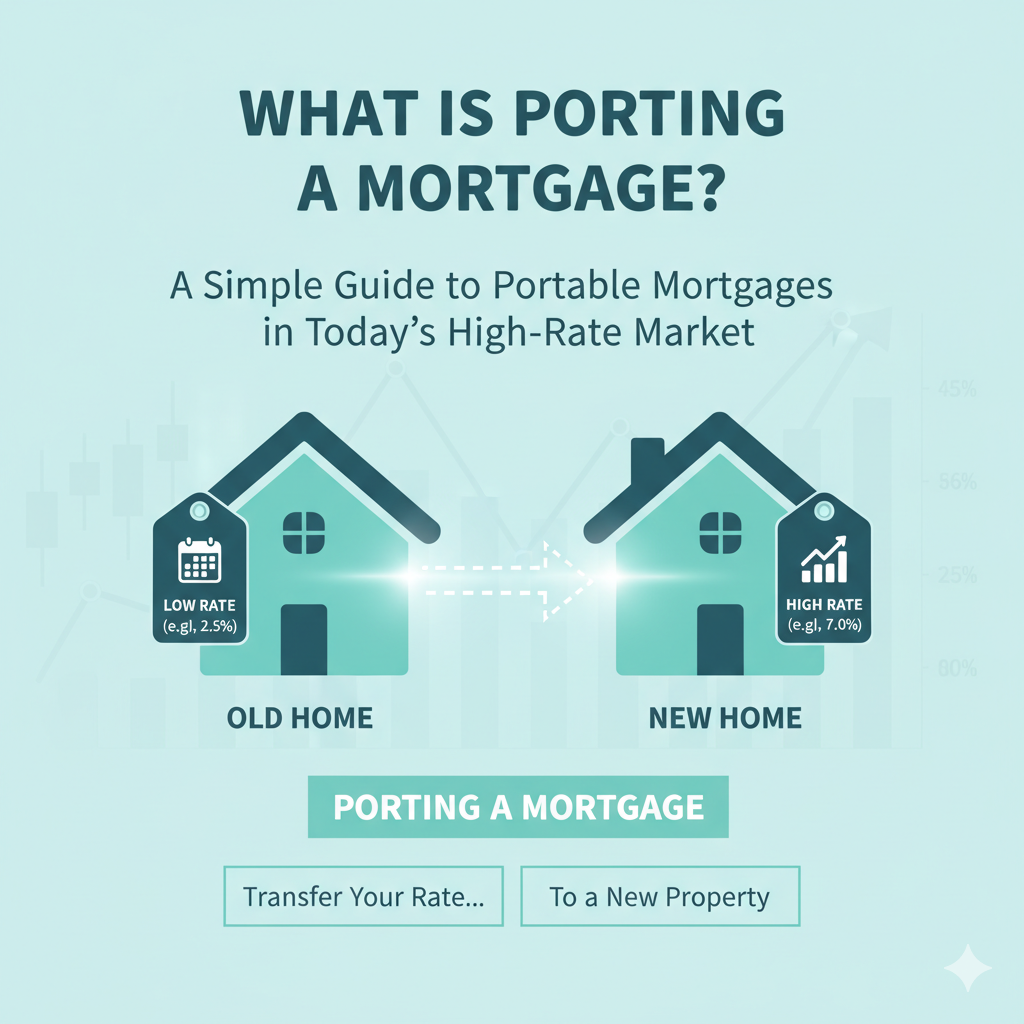
What Is Porting a Mortgage? A Simple Guide to Portable Mortgages in Today’s High-Rate Market
Porting a Mortgage
If you locked in a super-low mortgage rate a few years ago, you’re probably feeling a little “stuck.” Many homeowners want to move — for a new job, a growing family, or a better neighborhood — but they don’t want to give up their 2–3% mortgage rate and replace it with today’s higher rates.
That’s where mortgage porting, also called portable mortgages, enters the conversation. Although not yet widely available in the U.S., the idea is gaining traction in policy circles, industry discussions, and major news outlets.
Here’s a clear, friendly breakdown of what mortgage porting is, how it works, who benefits, and what challenges still stand in the way.
What Does “Porting a Mortgage” Mean?
Porting a mortgage simply means transferring your existing home loan to a new property.
Instead of paying off your current mortgage and taking out a brand-new one — usually at a much higher interest rate — you bring the old mortgage with you, including:
- Your original interest rate
- Your remaining balance
- Your current repayment schedule
Think of it as “moving your mortgage” the same way you move your furniture. You keep the same deal, just in a different house.
Why Is Mortgage Portability a Hot Topic Right Now?
Over 65% of U.S. homeowners have a mortgage rate under 4%. Many are below 3%.
With today’s rates hovering much higher, millions of families are effectively rate-locked — they don’t want to move because they don’t want to take on a new loan at double (or triple) the interest.
Portable mortgages are being discussed as a potential solution because they could:
✔ Help current homeowners move without penalty
✔ Unlock desperately needed housing inventory
✔ Make mobility easier for growing families
✔ Create a more flexible mortgage system
Industry leaders and regulators have recently commented on the concept, which is why it’s showing up more often in news and policy conversations.
How Would Porting a Mortgage Work?
While exact procedures would vary by lender, the process typically looks something like this:
1. Apply to “Port” Your Existing Mortgage
You’d notify your lender that you want to transfer your mortgage to a new home.
2. Re-Qualify Financially
Even if you’re keeping your loan, the lender still needs to verify you’re able to afford the new property. That means:
- Updated income verification
- Updated credit check
- A new home appraisal
3. Transfer Your Current Loan Balance
Your remaining loan balance and interest rate move to the new home.
4. Cover Any Price Difference
If the new home costs more than what you still owe, you typically cover the gap through:
- Cash
- A second mortgage
- A “blended” loan with a new portion at the current market rate
For many homeowners, this blended option is still far cheaper than replacing their entire mortgage with a new high-rate loan.
Who Would Benefit the Most From Mortgage Porting?
Portable mortgages are especially attractive for:
➡ Homeowners with low mortgage rates
Anyone who bought or refinanced between 2020 and 2022 could retain their historically low rate.
➡ Families who have grown out of their home
They can upgrade their space without a massive rate jump.
➡ Workers needing to move
Job relocations become more financially feasible.
➡ Homeowners who want more flexibility
Maybe you want a new neighborhood, better schools, or a home office — portability gives options without financial punishment.
Who Would NOT Benefit From Mortgage Porting?
There are a few groups that portability doesn’t help:
First-time buyers — They don’t have an existing mortgage to port.
Renters — Same reason.
People with mortgages that don’t allow portability — Many current loans don’t include portability clauses.
Those needing significantly more borrowing power — Large upgrades may require new financing at current rates.
Portable mortgages are most useful when you want to move without dramatically increasing your loan amount.
If Porting Is So Helpful, Why Don’t We Have It Already?
Portable mortgages are common in countries like Canada and the U.K., but the U.S. mortgage system is much more complex.
Here are the biggest obstacles:
1. Mortgage-Backed Securities
Most U.S. mortgages are bundled and sold to investors.
If a mortgage suddenly moves to a different property, it disrupts the risk model of those securities.
2. Operational Challenges
Lenders would need to:
- Re-underwrite each port
- Re-appraise the new property
- Re-work loan documentation and legal filings
All of that adds cost and time.
3. Investor Risk
If millions of homeowners moved their ultra-low mortgages to new homes, investors could be stuck with low-yield loans for much longer.
That could push interest rates even higher across the board.
Is Mortgage Porting Coming to the U.S.?
Industry insiders believe mortgage portability is more likely to appear in pilot programs first — perhaps limited to certain loan types or specific lenders.
It won’t be a universal option overnight, but it’s gaining attention and could become a real choice in the future.
For now, it’s best to think of mortgage porting as a promising idea that could help many homeowners — but one that still requires major system changes before it becomes widely available.
Final Thoughts
Mortgage porting is an appealing concept for anyone who wants to move but doesn’t want to lose their low interest rate. It has the potential to boost housing mobility, unlock more inventory, and give homeowners more control over their biggest financial asset.
But while portable mortgages sound simple, implementing them in the U.S. is complex. Until policymakers, lenders, and investors are aligned, portability remains more of a proposed solution than a standard option.
Still, as discussions continue — and as homeowners stay locked into low rates — mortgage porting is likely to stay in the spotlight.
Top 5 FAQs About Porting a Mortgage
1. What does it mean to port a mortgage?
Porting a mortgage means transferring your existing mortgage—along with its interest rate, remaining balance, and loan terms—to a new property. Instead of breaking your mortgage and applying for a brand-new loan, you simply “move” the current one to the next home you buy. This can help homeowners keep a low interest rate and avoid penalties that come with early mortgage cancellation.
2. Can anyone port their mortgage?
No. Mortgage portability depends on your lender, your loan type, and your financial situation at the time you move. Most fixed-rate mortgages allow porting, but many variable-rate loans do not. Lenders will also re-check your income, credit, and debt levels to make sure you still qualify for the loan. If your finances have changed, your lender may limit, adjust, or deny the porting request.
3. Does porting a mortgage save you money?
It can—especially if your current interest rate is much lower than today’s market rates. Porting allows you to keep that lower rate instead of refinancing into a more expensive mortgage. You may also avoid prepayment penalties that occur when breaking a mortgage early. However, if you’re upsizing to a more expensive home, you might need a “blend and extend” loan, which could slightly increase your rate on the new portion of the mortgage.
4. How long does the mortgage porting process take?
Most lenders provide a portability window of 30 to 120 days, meaning you must sell your current home and close on the new home within that timeframe. The approval process is similar to a regular mortgage review, which includes verifying income, checking credit scores, and assessing the new property. Starting early is important because missing the timeline could force you into a new mortgage at current rates.
5. What fees are involved in porting a mortgage?
Porting usually has fewer fees than breaking a mortgage, but there are still costs to consider. These may include appraisal fees on the new property, legal closing fees, and administrative charges from your lender. If you need to borrow more money for a pricier home, the new portion of the loan may come with a different rate. Always compare the total costs of porting versus refinancing or getting a new mortgage.


