
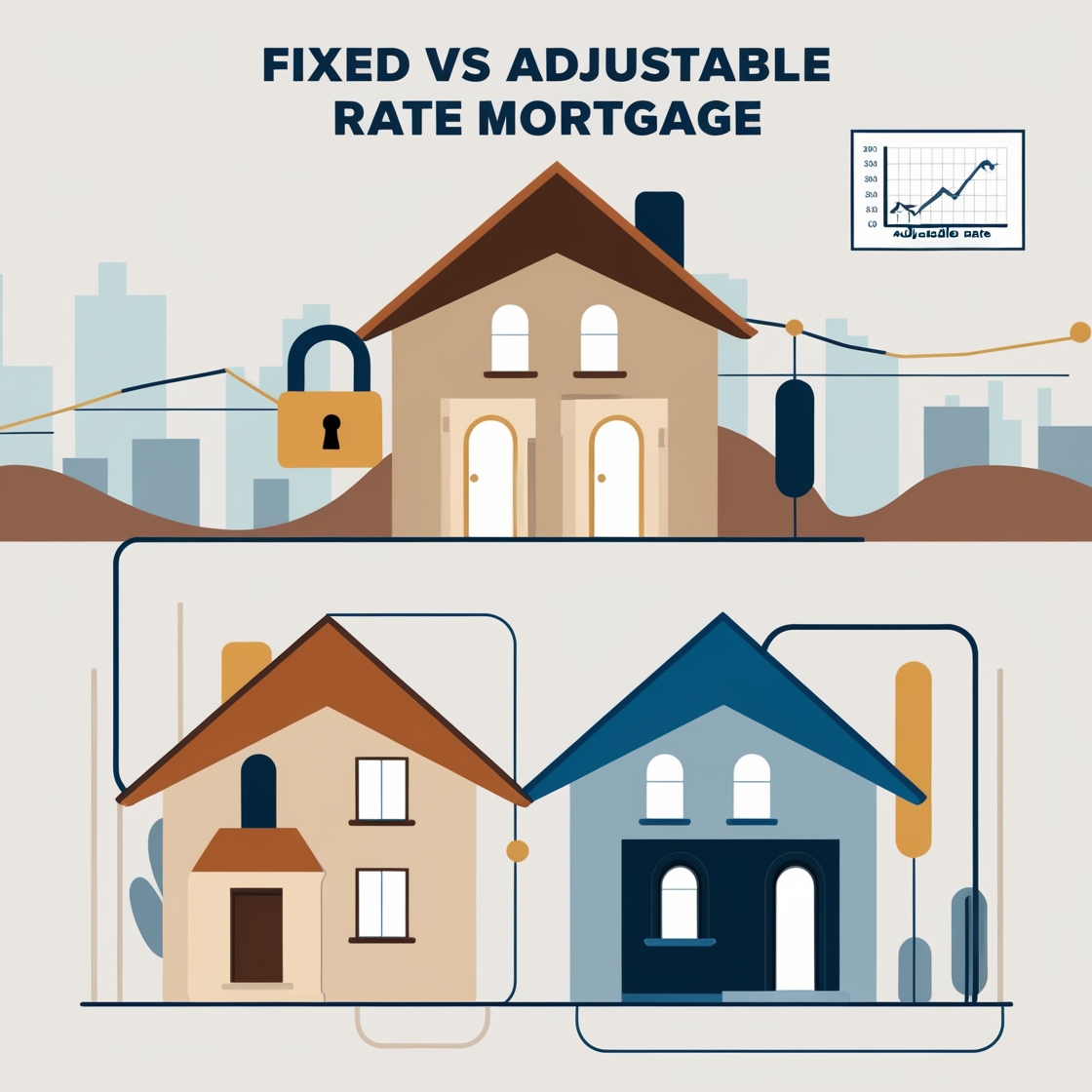
Fixed vs. Adjustable Rate Mortgage in Nashville: Which Loan is Right for You?
Fixed vs Adjustable Rate Mortgage Nashville
Navigating the Nashville mortgage landscape requires understanding the fundamental differences between fixed-rate mortgages and adjustable-rate mortgages (ARMs). As someone who has guided thousands of borrowers through this decision over the past two decades, I’ve witnessed firsthand how the right mortgage choice can save homeowners tens of thousands of dollars while the wrong choice can create financial stress.
Nashville’s dynamic real estate market, characterized by steady growth and increasing home values, presents unique considerations for mortgage selection. The city’s economic diversification, anchored by healthcare, technology, and entertainment industries, influences both mortgage availability and optimal loan structuring strategies.
Understanding Fixed-Rate Mortgages in Nashville
Fixed-rate mortgages provide payment stability through consistent interest rates for the entire loan term. In Nashville’s competitive housing market, where median home prices have appreciated significantly, this predictability becomes particularly valuable for long-term financial planning.
Key Characteristics of Fixed-Rate Mortgages
The fundamental appeal of fixed-rate mortgages lies in their unwavering payment structure. Once you lock in your rate, monthly principal and interest payments remain identical regardless of broader economic fluctuations. This stability proves especially beneficial in Nashville, where many professionals in healthcare and technology sectors value predictable housing costs for budgeting purposes.
Nashville fixed-rate mortgage benefits extend beyond simple payment consistency. These loans offer psychological comfort during uncertain economic periods, allowing homeowners to focus on career advancement and family goals without worrying about payment increases. The entertainment industry professionals who call Nashville home often appreciate this stability given the inherently variable nature of their income streams.
Fixed-rate mortgages typically come in 15-year and 30-year terms, with 30-year options being most popular among Nashville buyers. The longer amortization period reduces monthly payments, making homeownership more accessible in neighborhoods like The Gulch, Green Hills, and Belle Meade, where property values command premium prices.
Advantages of Fixed-Rate Mortgages
Payment predictability represents the primary advantage of fixed-rate mortgages. This consistency enables precise long-term budgeting, crucial for Nashville residents planning major life events like starting families or launching businesses in the city’s thriving entrepreneurial ecosystem.
Interest rate protection provides another significant benefit. When market rates rise, fixed-rate mortgage holders continue paying their original rate, potentially saving thousands annually. Nashville’s economic growth trajectory suggests continued interest rate volatility, making this protection increasingly valuable.
Simplified financial planning becomes possible with fixed-rate mortgages. Nashville residents can accurately project housing costs years into the future, facilitating decisions about retirement contributions, children’s education funding, and investment opportunities in the city’s growing markets.
Refinancing opportunities remain available with fixed-rate mortgages. When rates decline, Nashville homeowners can refinance to lower rates, capturing savings while maintaining payment stability. The city’s strong property values often provide equity necessary for favorable refinancing terms.
Disadvantages of Fixed-Rate Mortgages
Higher initial rates characterize fixed-rate mortgages compared to adjustable-rate options. This rate premium reflects the lender’s risk in guaranteeing rates for extended periods. Nashville buyers might face higher monthly payments initially, potentially limiting purchasing power in competitive neighborhoods.
Reduced purchasing power can result from higher fixed rates. The difference between fixed and adjustable rates might mean qualifying for a smaller loan amount, potentially excluding certain Nashville neighborhoods or property types from consideration.
Limited benefit from declining rates occurs with fixed-rate mortgages. While rate protection helps during increases, fixed-rate holders don’t automatically benefit when rates fall without refinancing, which involves costs and qualification requirements.
Opportunity costs arise when fixed-rate premiums could generate higher returns through investments. Nashville’s growing economy offers various investment opportunities that might yield superior returns compared to mortgage interest savings.
Comprehensive Analysis of Adjustable-Rate Mortgages
Adjustable-rate mortgages offer initial rate advantages but introduce payment variability over time. These loans particularly appeal to Nashville residents planning shorter-term homeownership or expecting income growth that would offset potential payment increases.
ARM Structure and Mechanics
ARMs typically feature initial fixed-rate periods followed by adjustment phases. Common Nashville ARM products include 5/1, 7/1, and 10/1 structures, where the first number indicates years of fixed rates and the second represents annual adjustment frequency thereafter.
How do adjustable-rate mortgages work in Nashville TN involves understanding rate adjustment mechanisms tied to specific indices, typically the Secured Overnight Financing Rate (SOFR). Nashville lenders add predetermined margins to these indices, creating your adjusted rate during variable periods.
Adjustable-rate mortgage caps and floors Nashville lenders implement provide borrower protections. Initial adjustment caps limit first adjustment increases, typically to 2% above the initial rate. Periodic caps restrict subsequent annual increases, usually to 2% per year. Lifetime caps prevent rates from exceeding specific thresholds above initial rates, commonly 5-6%.
Rate floors protect lenders by establishing minimum rates regardless of index movements. These floors ensure lenders maintain minimum profit margins even when indices decline significantly, though they rarely impact borrowers in rising rate environments.
ARM Advantages in Nashville’s Market
Lower initial rates represent ARM’s primary advantage. These reduced rates can increase purchasing power significantly in Nashville’s competitive market, potentially enabling buyers to afford neighborhoods or property types otherwise beyond their reach.
Payment flexibility benefits Nashville residents expecting income growth. Young professionals entering Nashville’s thriving healthcare, technology, or entertainment sectors often anticipate salary increases that would accommodate potential payment adjustments.
Short-term savings prove substantial for Nashville residents planning to relocate within the ARM’s fixed period. Military families stationed at nearby installations or corporate executives expecting transfers might benefit from ARM savings without experiencing rate adjustments.
Investment opportunity creation occurs when ARM savings enable larger down payments or reserve funds. Nashville’s appreciation potential suggests strategic value in maximizing initial home purchases rather than minimizing monthly payments.
ARM Risks and Considerations
Payment uncertainty represents ARM’s fundamental risk. Nashville homeowners face potential payment increases that could strain budgets, particularly concerning given the city’s rising living costs in popular neighborhoods.
Budgeting complexity increases with ARMs due to payment variability. Nashville families must plan for potential increases while maintaining financial flexibility for other goals, creating challenging balancing acts.
Refinancing requirements might become necessary if rates adjust unfavorably. Nashville’s competitive lending market offers options, but refinancing involves costs and qualification challenges that might prove difficult during rate adjustment periods.
Economic sensitivity affects ARMs more than fixed-rate mortgages. Nashville’s economy, while diversified, still faces cyclical influences that could impact both income stability and interest rate environments simultaneously.

Market Analysis: Nashville’s Current Mortgage Environment
Nashville’s mortgage market reflects broader national trends while maintaining unique regional characteristics. The city’s continued population growth and economic expansion influence both mortgage availability and pricing structures.
Current Rate Environment
Compare 30-year fixed mortgage rates Nashville vs 5/1 ARM reveals typical spreads of 0.75% to 1.25%, though these differences fluctuate with market conditions. Nashville lenders generally offer competitive rates due to the city’s strong economic fundamentals and borrower quality.
Market volatility has increased rate spreads between fixed and adjustable products. Economic uncertainty following recent global events has widened these gaps as lenders price additional risk into longer-term commitments while maintaining ARM competitiveness.
Local competition among Nashville mortgage lenders offers borrowers advantageous conditions. Major banks, credit unions, and mortgage companies compete actively, creating opportunities for rate shopping and negotiation.
Economic Factors Influencing Mortgage Choice
Nashville’s economic diversification provides stability supporting both mortgage types. The healthcare sector, anchored by institutions like Vanderbilt University Medical Center and HCA Healthcare, offers steady employment supporting fixed-rate mortgage commitments.
Technology sector growth introduces variables favoring ARM consideration. Nashville’s emerging tech companies often provide stock options and performance bonuses that could offset potential ARM payment increases while benefiting from initial rate savings.
Real estate appreciation trends influence mortgage selection strategies. Nashville’s consistent property value increases suggest that homeowners building equity quickly might benefit from ARM savings during initial periods, then refinance using accumulated equity.
Strategic Decision Framework for Nashville Borrowers
Choosing between fixed and adjustable rate mortgages requires analyzing personal financial situations against Nashville’s specific market conditions. This decision impacts long-term wealth building and financial flexibility.
When to Choose Fixed-Rate Mortgages
Long-term residence plans strongly favor fixed-rate mortgages. Nashville residents intending to stay in homes beyond ARM adjustment periods benefit from payment predictability and rate protection.
Conservative financial management styles align with fixed-rate mortgages. Nashville borrowers preferring certainty over potential savings should prioritize payment stability, especially those approaching retirement or managing multiple financial obligations.
Rising rate environments increase fixed-rate mortgage attractiveness. When economic indicators suggest increasing rates, locking fixed rates provides protection against future increases.
First-time home buyer Nashville fixed vs ARM advice typically favors fixed rates due to their simplicity and predictability. New homeowners benefit from consistent payments while adjusting to other homeownership responsibilities and costs.
When to Consider Adjustable-Rate Mortgages
Short-term ownership plans favor ARMs when move timelines fall within fixed periods. Nashville residents expecting relocations for career advancement might benefit from ARM savings without experiencing adjustments.
Income growth expectations support ARM selection. Young professionals entering Nashville’s growing industries with clear advancement paths might handle potential payment increases while benefiting from initial savings.
Investment strategies sometimes favor ARMs when savings enable larger down payments or investment opportunities. Nashville’s growing economy offers various investment options that might generate returns exceeding ARM payment increases.
Risk tolerance assessment proves crucial for ARM consideration. Nashville borrowers comfortable managing payment uncertainty while pursuing potential savings might find ARMs align with their financial philosophies.
Detailed Product Comparison: Popular Nashville Mortgage Options
Understanding specific loan products available in Nashville helps borrowers make informed decisions based on actual terms and conditions rather than general concepts.
30-Year Fixed Mortgages
The 30-year fixed mortgage remains Nashville’s most popular option due to its payment affordability and long-term stability. These loans offer the lowest monthly payments among fixed-rate options while providing complete rate protection.
Nashville lenders offer competitive 30-year rates, typically ranging within 0.25% of national averages. Local credit unions often provide slightly better rates to members, while major banks offer convenience and extensive service networks.
Qualification requirements for 30-year fixed mortgages in Nashville generally follow conventional standards: credit scores above 620, debt-to-income ratios below 43%, and down payments ranging from 3% to 20% depending on loan programs.
15-Year Fixed Mortgages
Pros and cons of 15-year fixed vs 7/1 ARM Nashville comparisons reveal distinct advantages for different borrower profiles. Fifteen-year mortgages offer substantial interest savings through shorter terms and lower rates, typically 0.25% to 0.50% below 30-year options.
Nashville borrowers choosing 15-year mortgages typically have higher incomes and prioritize debt elimination over payment minimization. These loans appeal to professionals in Nashville’s higher-paying healthcare and technology sectors who can manage increased monthly payments.
Equity building accelerates significantly with 15-year mortgages due to higher principal payments and shorter terms. Nashville’s appreciating property values combine with rapid principal reduction to create substantial wealth building opportunities.
5/1 Adjustable-Rate Mortgages
The 5/1 ARM offers five years of fixed payments followed by annual adjustments, providing a middle ground between stability and flexibility. Nashville lenders typically offer these products at rates 0.75% to 1.25% below 30-year fixed options.
Initial payment savings can be substantial with 5/1 ARMs. On a $400,000 Nashville home purchase, rate differences might save $200-300 monthly during the initial period, totaling $12,000-18,000 over five years.
Adjustment mechanisms for Nashville 5/1 ARMs typically include 2% initial caps, 2% annual caps, and 5% lifetime caps above initial rates. These protections limit payment shock while allowing lenders to manage interest rate risk.
7/1 and 10/1 ARM Products
Extended fixed periods with 7/1 and 10/1 ARMs appeal to Nashville borrowers seeking longer stability while maintaining initial rate advantages. These products particularly suit residents expecting life changes within the fixed periods.
Rate advantages typically diminish with longer fixed periods, but 7/1 and 10/1 ARMs still offer savings compared to fixed-rate mortgages. Nashville borrowers must weigh reduced savings against extended stability when considering these options.
Market availability for extended ARM products varies among Nashville lenders. Some institutions specialize in these products while others focus on more common 5/1 options, requiring borrowers to shop carefully for best terms.

Financial Planning Strategies for Nashville Homeowners
Mortgage selection represents just one component of comprehensive financial planning. Nashville residents must consider how their mortgage choice impacts other financial goals and opportunities.
Integration with Investment Planning
Best time to get a fixed vs adjustable rate mortgage in Nashville current market depends partly on alternative investment opportunities. When investment returns exceed mortgage rate savings, ARMs might free capital for higher-yielding investments.
Nashville’s growing economy offers various investment opportunities, from real estate development to technology startups. ARM savings might enable participation in these opportunities while fixed-rate mortgages provide stability for conservative investment approaches.
Tax implications vary between mortgage types based on interest deductibility and investment taxation. Nashville residents should consult tax professionals to understand how mortgage choices affect overall tax strategies.
Retirement Planning Considerations
Mortgage payoff timing affects retirement planning significantly. Nashville residents approaching retirement might prefer fixed-rate mortgages for predictable housing costs or ARMs for potential savings enabling increased retirement contributions.
Cash flow management becomes crucial during retirement transitions. Fixed-rate mortgages provide payment certainty during income transitions while ARMs introduce uncertainty that might conflict with fixed retirement incomes.
Estate planning considerations influence mortgage selection for Nashville residents concerned with wealth transfer. Different mortgage structures affect estate values and inheritance planning strategies differently.
Risk Management Strategies
Insurance coordination with mortgage selection helps manage overall financial risk. Nashville residents should consider how different mortgage types affect insurance needs and overall risk management strategies.
Emergency fund planning must account for mortgage payment variability with ARMs. Nashville families should maintain larger emergency reserves with adjustable-rate mortgages to handle potential payment increases.
Diversification principles apply to mortgage selection as part of overall financial strategies. Nashville residents with variable income might prefer fixed mortgages for stability, while those with stable income might consider ARM risks more manageable.
Local Market Insights: Nashville Mortgage Lenders and Options
Nashville’s competitive lending environment offers borrowers numerous options for both fixed and adjustable rate mortgages. Understanding local market dynamics helps borrowers secure optimal terms and conditions.
Major Lender Categories
National banks provide extensive product offerings and streamlined processes appealing to busy Nashville professionals. These institutions offer competitive rates and sophisticated online platforms, though service might lack local market expertise.
Regional banks often combine competitive pricing with local market knowledge. Nashville-based institutions understand area property values and economic conditions, potentially offering more flexible underwriting approaches.
Credit unions frequently provide Nashville members with below-market rates and personalized service. These member-owned institutions often feature lower fees and more accommodating qualification standards.
Mortgage brokers access multiple lender networks, potentially securing better rates and terms than direct applications. Nashville brokers familiar with local lending environments can navigate complex situations effectively.
Shopping Strategies for Nashville Borrowers
Rate comparison requires understanding total loan costs beyond simple interest rates. Nashville borrowers should evaluate origination fees, discount points, and other closing costs when comparing lenders.
Timing considerations affect rate shopping success. Nashville’s active real estate market requires quick decisions, making pre-approval processes crucial for serious buyers.
Negotiation opportunities exist in Nashville’s competitive market. Borrowers with strong credit profiles and substantial assets can often secure rate concessions or reduced fees through skilled negotiation.
Refinancing Considerations in Nashville
Refinance mortgage Nashville fixed to ARM calculator tools help borrowers evaluate opportunities to optimize their mortgage terms based on changing financial circumstances or market conditions.
Fixed-to-ARM Refinancing
Market conditions sometimes favor refinancing from fixed-rate mortgages to ARMs. When rate differences become substantial and borrowers expect shorter-term ownership, this strategy might generate significant savings.
Qualification requirements for refinancing typically mirror purchase loan standards. Nashville homeowners with improved credit scores or increased equity might access better terms than originally available.
Cost-benefit analysis must include refinancing expenses against potential savings. Nashville borrowers should calculate break-even periods and total savings potential before proceeding with refinancing decisions.
ARM-to-Fixed Refinancing
Rate environment changes might prompt ARM holders to refinance into fixed-rate mortgages. When ARM adjustments approach or rates begin rising, fixed-rate refinancing provides payment stability.
Timing considerations prove crucial for ARM-to-fixed refinancing. Nashville borrowers should monitor rate trends and ARM adjustment schedules to optimize refinancing timing.
Equity requirements for refinancing might affect available options. Nashville’s appreciating property values often provide equity necessary for favorable refinancing terms, though market fluctuations can impact available options.
Advanced Strategies for Nashville Real Estate Investors
Real estate investment strategies in Nashville might favor different mortgage approaches based on investment goals, risk tolerance, and market timing considerations.
Investment Property Considerations
Rental income considerations affect mortgage selection for Nashville investment properties. Fixed-rate mortgages provide predictable expenses for rental calculations while ARMs introduce variables affecting profitability projections.
Tax implications for investment properties differ from owner-occupied homes. Nashville investors should understand how different mortgage types affect depreciation schedules, interest deductibility, and overall investment returns.
Exit strategies influence mortgage selection for investment properties. Investors planning quick property flips might benefit from ARM savings while long-term holders might prefer fixed-rate stability.
Portfolio Management Approaches
Diversification strategies might include mixing mortgage types across investment portfolios. Nashville investors with multiple properties might balance fixed and adjustable rate mortgages to optimize overall returns and risk management.
Market timing becomes more critical for investment properties than owner-occupied homes. Nashville investors must consider interest rate cycles, property appreciation trends, and rental market conditions when selecting mortgage types.
Technology and Tools for Mortgage Decision Making
Modern technology provides Nashville borrowers with sophisticated tools for analyzing mortgage options and making informed decisions based on personal financial circumstances.
Online Calculators and Analysis Tools
Mortgage calculators help Nashville borrowers compare monthly payments, total interest costs, and amortization schedules between fixed and adjustable rate options. These tools enable scenario analysis for different rate environments and loan terms.
Rate tracking tools alert Nashville borrowers to favorable market conditions for refinancing or new purchases. Automated notifications help busy professionals monitor opportunities without constant market research.
Affordability calculators incorporate Nashville-specific costs of living and property tax rates, providing more accurate assessments of homeownership expenses beyond mortgage payments.
Professional Advisory Services
Financial planners help Nashville residents integrate mortgage decisions into comprehensive financial strategies. These professionals assess how mortgage choices affect retirement planning, investment strategies, and overall wealth building goals.
Mortgage advisors provide specialized expertise in loan product selection and lender negotiations. Nashville residents benefit from professional guidance through complex mortgage markets and product offerings.
Real estate professionals offer market insights affecting mortgage timing and selection. Experienced Nashville agents understand how mortgage choices impact purchasing power and negotiating positions in competitive markets.

Economic Forecasting and Mortgage Planning
Understanding economic trends and forecasts helps Nashville borrowers make informed mortgage decisions aligned with likely future market conditions.
Interest Rate Projections
Economic indicators suggest potential interest rate directions affecting mortgage planning. Nashville borrowers should consider Federal Reserve policies, inflation trends, and economic growth projections when timing mortgage decisions.
Regional economic factors specific to Nashville influence local mortgage markets. The city’s continued growth, major corporate relocations, and infrastructure investments affect both property values and mortgage availability.
Timing strategies based on economic forecasting can optimize mortgage selection. Nashville residents might accelerate home purchases or refinancing based on projected rate movements and economic conditions.
Local Market Predictions
Population growth trends in Nashville suggest continued housing demand and property appreciation. These factors influence both mortgage availability and optimal loan selection strategies for different borrower profiles.
Economic diversification reduces Nashville’s vulnerability to single-industry downturns, supporting stable mortgage markets. This stability affects risk assessments for both fixed and adjustable rate mortgage selections.
Infrastructure investments in Nashville, including transportation improvements and urban development projects, influence property values and mortgage market conditions in specific neighborhoods and regions.
Frequently Asked Questions (FAQ)
What are the current fixed vs adjustable mortgage rates in Nashville today?
Current Nashville mortgage rates fluctuate daily based on market conditions, borrower qualifications, and lender policies. Fixed-rate mortgages typically range 6.5% to 7.5% for 30-year terms, while 5/1 ARMs often start 0.75% to 1.25% lower. Rates vary significantly based on credit scores, down payments, and loan amounts. Nashville borrowers should obtain quotes from multiple lenders for current pricing, as competition among local institutions can create advantageous opportunities for qualified borrowers.
Which type of mortgage is better for a first-time home buyer in Nashville, fixed or adjustable?
First-time home buyers in Nashville typically benefit more from fixed-rate mortgages due to their payment predictability and simplicity. New homeowners face numerous adjustments including maintenance costs, property taxes, and utility expenses. Fixed payments eliminate mortgage payment uncertainty, enabling better budgeting and financial planning. However, first-time buyers expecting significant income growth or planning short-term ownership might consider ARMs for initial payment savings. The decision depends on individual financial stability, risk tolerance, and long-term housing plans.
What are the pros and cons of a fixed-rate mortgage compared to an ARM in Nashville?
Fixed-rate mortgages offer payment stability, interest rate protection, and simplified budgeting, making them ideal for long-term homeowners and conservative financial managers. However, they typically feature higher initial rates and reduced purchasing power compared to ARMs. Adjustable-rate mortgages provide lower initial rates, increased buying power, and potential savings for short-term owners, but introduce payment uncertainty and budgeting complexity. Nashville’s growing economy supports both options, with choice depending on individual circumstances, risk tolerance, and homeownership timeline expectations.
How do interest rate changes impact adjustable-rate mortgage payments in Nashville?
Interest rate changes affect ARM payments based on adjustment schedules and rate caps. During fixed periods, payments remain constant regardless of rate movements. After adjustment periods begin, rate changes tied to market indices directly impact monthly payments within cap limitations. Nashville ARM holders face potential increases when rates rise, with typical caps limiting annual adjustments to 2% and lifetime increases to 5-6% above initial rates. Conversely, declining rates can reduce payments, though rate floors prevent excessive decreases.
When should I consider a fixed-rate mortgage over an adjustable-rate mortgage in the Nashville market?
Choose fixed-rate mortgages when planning long-term Nashville residence, preferring payment predictability, expecting rising interest rates, or managing conservative financial strategies. Fixed rates particularly benefit first-time buyers, borrowers approaching retirement, or those with tight budgets requiring payment certainty. Nashville’s stable economy supports fixed-rate strategies for professionals seeking predictable housing costs. Consider fixed rates when current rate environments appear favorable historically or when ARM rate advantages seem insufficient to justify payment uncertainty risks.
What are the average closing costs for fixed vs adjustable mortgages in Nashville?
Closing costs for Nashville mortgages typically range 2% to 5% of loan amounts regardless of mortgage type. However, ARMs sometimes feature slightly lower origination fees due to reduced lender risk during initial periods. Average costs include origination fees ($1,000-$2,000), appraisal fees ($400-$600), title insurance ($800-$1,200), and various administrative charges. Nashville’s competitive market enables fee negotiation, particularly for borrowers with strong credit profiles. Some lenders offer no-closing-cost options, incorporating fees into rates, which might favor ARM selections for short-term ownership plans.
Can I refinance from a fixed to an adjustable mortgage (or vice versa) in Nashville, and is it a good idea?
Nashville homeowners can refinance between mortgage types based on changing circumstances and market conditions. Fixed-to-ARM refinancing might benefit borrowers planning relocations within ARM fixed periods or seeking payment reductions when rate spreads become substantial. ARM-to-fixed refinancing provides payment stability when adjustments approach or rate environments suggest increases. Refinancing decisions should consider closing costs, break-even periods, and total savings potential. Nashville’s appreciating property values often provide equity supporting favorable refinancing terms for qualified borrowers.
What local Nashville lenders offer both fixed and adjustable-rate mortgage options?
Nashville mortgage lenders offering both fixed and adjustable rate options include major banks like First Tennessee (now First Horizon), Regions Bank, and SunTrust (now Truist). Local institutions like ServU Credit Union and Cumberland Bank provide competitive rates with personalized service. National lenders including Quicken Loans, Wells Fargo, and Bank of America maintain strong Nashville presences. Mortgage brokers access multiple lender networks, potentially securing better terms. Nashville borrowers benefit from shopping multiple lenders, as competition creates opportunities for rate concessions and reduced fees.
How long do adjustable-rate mortgages typically stay fixed in Nashville before adjusting?
Nashville ARM fixed periods vary by product type, with common options including 5/1 (five-year fixed), 7/1 (seven-year fixed), and 10/1 (ten-year fixed) structures. Some lenders offer 3/1 or even 1/1 ARMs, though these are less popular due to earlier adjustment risks. The initial fixed period provides payment stability while offering rate advantages over fixed-rate mortgages. After fixed periods end, rates adjust annually based on market indices plus lender margins, subject to adjustment caps protecting borrowers from excessive payment increases.
What economic forecasts for Nashville should I consider when choosing between a fixed and adjustable mortgage?
Nashville economic forecasts suggest continued population growth, economic diversification, and property appreciation supporting both mortgage types. The city’s healthcare, technology, and entertainment sectors provide employment stability favoring fixed-rate mortgage commitments. However, growth industries also create income advancement opportunities that might support ARM payment adjustments. Interest rate projections, inflation trends, and Federal Reserve policies affect both mortgage types differently. Nashville borrowers should consider local economic indicators, personal industry prospects, and national monetary policies when selecting between fixed and adjustable rate mortgages for optimal long-term financial outcomes.
This comprehensive analysis is provided for educational purposes and should not replace personalized financial advice. Nashville residents should consult with qualified mortgage professionals and financial advisors to determine optimal mortgage strategies based on individual circumstances, current market conditions, and specific financial goals. Shop Rates, your trusted Nashville lending partner, stands ready to help you navigate these important decisions with expert guidance tailored to your unique situation.


