
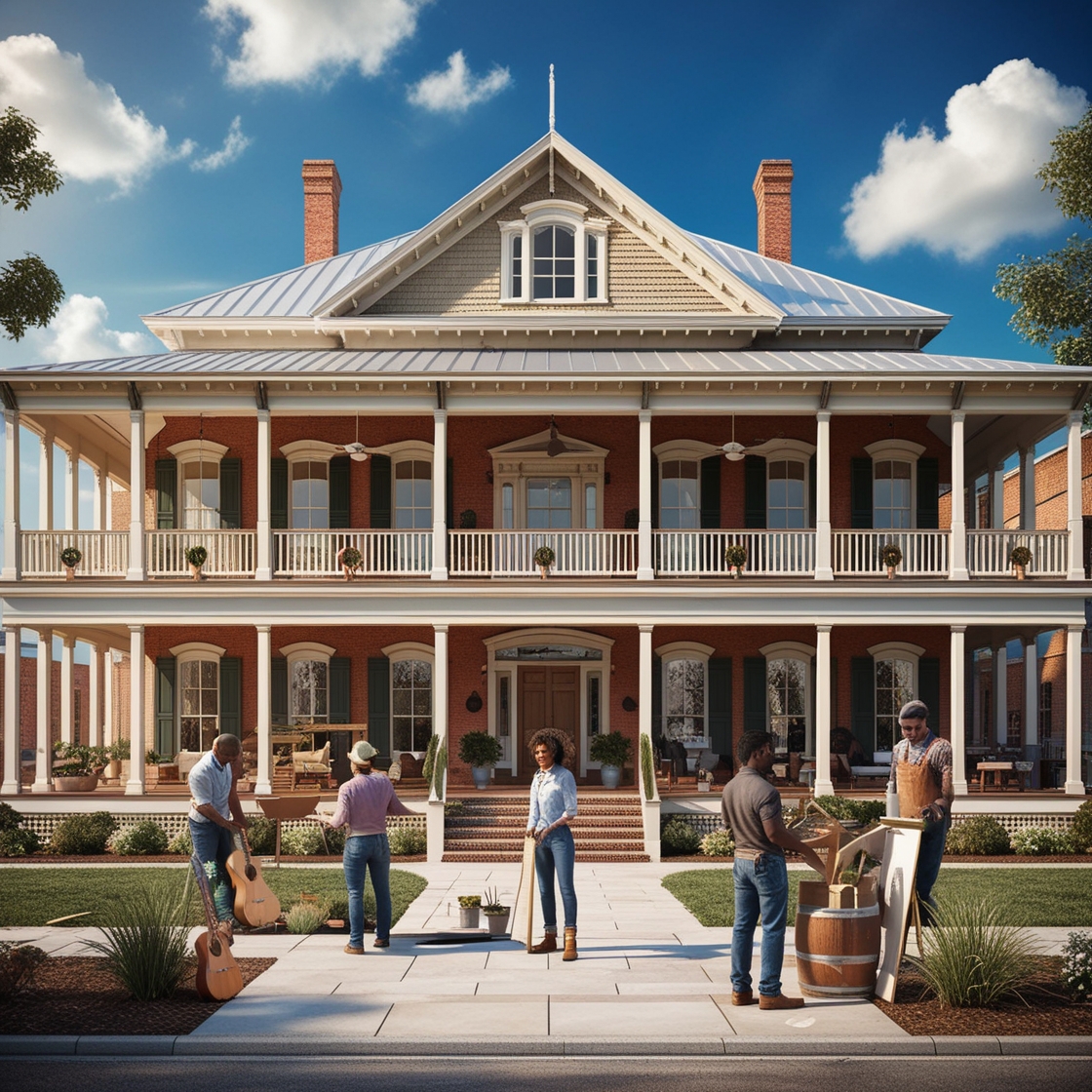
Investing in Historic Properties in Nashville: Preservation and Profit
Investing in Nashville Historic Homes
Walking through Nashville’s tree-lined streets, you can’t help but notice the architectural gems that tell the story of Music City’s rich past. Victorian mansions with intricate gingerbread trim, stately Craftsman bungalows, and grand Antebellum estates stand as testaments to bygone eras. For savvy investors, these historic properties represent more than just beautiful buildings—they’re opportunities to blend financial success with meaningful preservation.
Investing in Nashville historic homes has become increasingly attractive as the city’s population swells and demand for unique housing surges. Unlike cookie-cutter developments, historic properties offer character that money simply can’t buy in new construction. They provide investors with multiple revenue streams through federal and state tax incentives, grant opportunities, and the premium that buyers and renters pay for authenticity.
Yet diving into historic property investment isn’t like purchasing any other real estate. Success requires understanding preservation standards, navigating regulatory frameworks, and balancing restoration costs with profit potential. Having guided dozens of investors through historic property acquisitions over the past decade, I’ve witnessed both spectacular successes and costly missteps. The difference often lies in preparation, patience, and partnering with the right professionals.
This comprehensive guide will equip you with everything needed to make informed decisions about Nashville’s historic property market. Whether you’re eyeing a Victorian cottage in Germantown or considering a complete renovation project in East Nashville, understanding both the preservation requirements and profit potential will determine your investment success.
The Enduring Appeal of Nashville’s Historic Properties
Nashville’s historic architecture reflects the city’s evolution from frontier settlement to cultural powerhouse. The diversity of architectural styles available to investors spans nearly two centuries, each with distinct characteristics and market appeal.
Victorian-era homes (1860s-1900) showcase elaborate ornamentation, asymmetrical facades, and rich woodwork that captivates today’s buyers. These properties often feature high ceilings, original hardwood floors, and unique details like stained glass windows or decorative fireplaces. In neighborhoods like Belmont-Hillsboro, Victorian homes regularly command premium prices due to their proximity to universities and downtown.
Craftsman bungalows from the early 1900s represent some of Nashville’s most sought-after historic properties. Their functional design, built-in cabinetry, and emphasis on natural materials resonate with modern buyers who appreciate both craftsmanship and livability. East Nashville’s Craftsman homes have seen remarkable appreciation as young professionals seek authentic character within walking distance of trendy restaurants and music venues.
Colonial Revival and Neoclassical mansions built during Nashville’s early 20th-century prosperity offer investors substantial square footage and impressive curb appeal. These grand homes, particularly those in Belle Meade and surrounding areas, attract affluent buyers willing to pay significant premiums for historical significance combined with spacious living.
The cultural significance of preserving these architectural treasures extends beyond individual property values. Nashville’s historic neighborhoods maintain community character that newer developments struggle to replicate. This authenticity attracts both residents and tourists, creating sustained demand that supports property values and rental income potential.
Moreover, historic properties often sit on larger lots with mature landscaping—amenities that new construction simply cannot duplicate. The scarcity of such properties in desirable locations creates natural barriers to competition, protecting long-term investment value in ways that mass-produced housing cannot match.
Deciphering the Financial Benefits: Profit from Preservation
The financial advantages of historic property investment extend far beyond simple appreciation. Multiple incentive programs specifically reward investors who commit to proper restoration and preservation standards.
Tax Credits for Renovating Historic Homes Nashville TN
Federal historic tax credits provide the most substantial financial incentive for qualified rehabilitation projects. The 20% federal historic tax credit applies to income-producing properties listed on the National Register of Historic Places or contributing to National Register historic districts. This credit covers 20% of qualified rehabilitation expenses, potentially saving investors tens of thousands of dollars on major renovation projects.
To qualify, properties must undergo “substantial rehabilitation”—meaning renovation costs must exceed the greater of $5,000 or the property’s adjusted basis. All work must meet the Secretary of Interior’s Standards for Rehabilitation, ensuring historical integrity while allowing necessary modernization.
The application process involves three phases: pre-approval of the rehabilitation plan, approval of work in progress, and final certification upon completion. While the process requires patience and documentation, successful applicants receive dollar-for-dollar tax credit reductions over five years.
Tennessee state historic tax credits complement federal incentives, offering additional savings for qualified projects. The state provides 25% tax credits for certified rehabilitation of income-producing historic properties, with a minimum investment threshold of $5,000. These credits can be combined with federal incentives, potentially covering 45% of qualified rehabilitation costs.
Local incentives vary by jurisdiction but often include property tax freezes or reductions for properties undergoing historic renovation. Davidson County offers property tax relief programs for historic properties that meet specific preservation criteria, providing ongoing savings that improve cash flow for rental properties.
Grants for Historic Home Preservation Nashville
Beyond tax credits, various grant programs support historic preservation efforts throughout Nashville. The Tennessee Historical Commission administers grants for properties listed on the National Register, funding everything from architectural assessments to specific restoration projects.
Nashville Historical Commission grants focus on properties within local historic overlay districts. These competitive grants typically fund exterior restoration work that maintains historical accuracy while improving structural integrity. Priority often goes to projects that demonstrate financial need and community benefit.
Private foundations also support historic preservation through targeted grant programs. The National Trust for Historic Preservation offers emergency grants for threatened historic properties, while local organizations like the Nashville Preservation Alliance provide smaller grants for specific restoration elements.
Successfully securing grants requires detailed applications demonstrating historical significance, preservation plans that meet established standards, and often matching fund commitments. However, grant funding can significantly reduce renovation costs while ensuring work meets preservation standards that protect long-term property values.
Rehabbing Historic Homes for Profit Nashville
Strategic rehabilitation of historic properties can generate substantial returns through multiple approaches. Fix-and-flip strategies work particularly well with smaller historic homes in rapidly appreciating neighborhoods like East Nashville or Germantown. Investors who understand period-appropriate restoration techniques can dramatically increase property values while preserving historical character.
Consider a typical East Nashville Craftsman bungalow purchased for $180,000 requiring $75,000 in restoration work. After applying for federal and state tax credits totaling $33,750 (45% of qualified expenses), the net renovation cost drops to $41,250. With comparable restored properties selling for $320,000-$350,000, the profit potential exceeds $90,000 even after transaction costs.
Buy-and-hold rental strategies capitalize on premium rents that historic properties command. Restored historic homes often rent for 15-25% above comparable modern properties due to their unique character and desirable locations. The combination of appreciation potential, rental premiums, and ongoing tax benefits creates compelling long-term returns.
Luxury short-term rental conversions represent another profitable approach, particularly for historic properties in tourist-friendly neighborhoods. A beautifully restored Victorian home near downtown Nashville can command $200-$400 per night, generating annual revenues that far exceed traditional rental income.
Nashville Historic Home Market Trends for Investors
Nashville’s historic property market has demonstrated remarkable resilience and growth over the past decade. Properties in established historic districts have appreciated at rates consistently exceeding citywide averages, with some neighborhoods seeing 8-12% annual appreciation.
Demand drivers include Nashville’s continued population growth, limited supply of authentic historic properties, and increasing appreciation for unique architectural character among millennials and Gen-X buyers. The city’s music and entertainment industry attracts residents who value creativity and authenticity—traits that historic properties embody.
Market timing considerations suggest favorable conditions for historic property investment. While overall Nashville real estate prices have risen significantly, many historic properties remain undervalued relative to their potential after restoration. This gap between current condition and restored value creates opportunities for investors willing to tackle renovation projects.
Rental market dynamics strongly favor historic properties in walkable neighborhoods near employment centers and entertainment districts. Young professionals consistently choose character-rich historic rentals over sterile apartment complexes, supporting premium rental rates that justify higher purchase prices and renovation investments.
Financing Options for Nashville Historic Property Investment
Traditional mortgage financing applies to historic properties meeting standard lending criteria, but specialized financing options often provide better terms for renovation projects.
203(k) renovation loans from FHA allow investors to finance both purchase price and renovation costs in a single mortgage. These loans work particularly well for historic properties requiring substantial updates to mechanical systems or structural elements.
Historic property construction loans from community banks familiar with local historic districts offer flexible terms that accommodate the unique challenges of historic renovation. These lenders understand that restoration timelines often exceed typical construction schedules due to preservation requirements and specialized materials.
Private hard money lenders provide quick financing for time-sensitive opportunities, though at higher interest rates. For experienced investors confident in their renovation timelines and exit strategies, hard money can secure properties in competitive markets.
Portfolio lenders who keep loans in-house rather than selling to secondary markets often show greater flexibility with historic properties that might not meet standard automated underwriting criteria.

Navigating the Nuances: Challenges and Considerations
Pros and Cons of Buying a Historic House in Nashville
Advantages of historic property investment create compelling reasons to consider these unique opportunities:
- Distinctive character that new construction cannot replicate attracts premium-paying buyers and renters
- Appreciation potential often exceeds market averages due to scarcity and desirability
- Tax benefits through federal and state historic tax credit programs substantially reduce renovation costs
- Community appeal of established historic neighborhoods provides stability and long-term demand
- Higher rental rates as tenants pay premiums for authentic architectural features and neighborhood character
- Investment protection through historic overlay districts that prevent inappropriate development nearby
Challenges require careful consideration before committing to historic property investment:
- Higher renovation costs due to specialized materials, skilled craftsmen, and preservation standards
- Unexpected issues common in older buildings can dramatically increase project budgets
- Maintenance demands exceed those of newer properties, requiring ongoing attention and expense
- Regulatory hurdles through historic review processes can delay projects and limit modification options
- Financing complexities as some lenders hesitate to finance properties requiring extensive renovation
- Market limitations since historic properties appeal to smaller buyer pools than conventional homes
Historic Home Renovation Costs Nashville TN
Understanding renovation costs prevents budget overruns that can destroy investment returns. Structural improvements often represent the largest expense category, particularly for properties with foundation issues, roof problems, or load-bearing wall modifications. Budget $15,000-$40,000 for major structural work depending on property size and scope of issues.
Mechanical systems in historic homes typically require complete replacement to meet modern standards and building codes. HVAC installation in homes without existing ductwork runs $12,000-$25,000, while electrical service upgrades range from $8,000-$15,000. Plumbing replacement averages $10,000-$20,000 for complete home re-plumbing.
Exterior restoration varies dramatically based on property condition and preservation requirements. Roof replacement with period-appropriate materials costs $12,000-$30,000, while exterior painting and trim repair ranges from $5,000-$15,000. Window restoration or replacement requires $800-$1,500 per window depending on size and condition.
Interior finishes can consume enormous budgets if not carefully managed. Original hardwood floor refinishing costs $3-$8 per square foot, while kitchen renovations in historic homes range from $25,000-$75,000 depending on the level of customization required to fit period architecture.
Specialized historic materials often cost 25-50% more than standard building supplies. Hand-forged hardware, period-appropriate fixtures, and custom millwork matching original profiles require premium pricing but are essential for maintaining historical integrity.
Contingency planning becomes critical given the uncertainty inherent in historic renovation. Experienced investors budget 20-30% contingencies for unexpected discoveries during demolition and renovation phases.
Legal Considerations for Historic Home Ownership Nashville
Historic overlay districts impose design guidelines that restrict modifications to preserve neighborhood character. Property owners must obtain approval for exterior changes visible from public streets, including roof replacement, window modifications, additions, and even some landscaping changes.
Certificate of Appropriateness applications are required for most exterior work in historic overlay districts. The review process involves submittal of detailed plans and materials specifications, public hearings, and approval by local historic commissions. This process typically takes 4-8 weeks but can extend longer for complex projects.
Secretary of Interior Standards govern all work on properties seeking federal or state historic tax credits. These standards require that rehabilitation work preserve historic character while allowing necessary modernization. Violations can result in credit recapture, making compliance essential for tax credit projects.
Due diligence investigations must include thorough research of historic designations, overlay district requirements, and any deed restrictions or conservation easements that might limit future modifications. Title companies familiar with historic properties provide essential guidance during this process.
Professional consultations with attorneys experienced in historic preservation law prevent costly mistakes and ensure compliance with all applicable regulations. The complexity of historic property law justifies professional guidance even for experienced real estate investors.
Working with qualified professionals becomes essential for successful historic property investment. Architects specializing in historic preservation understand both preservation standards and modern building codes, designing renovations that meet both requirements while maintaining project budgets.
Experienced contractors familiar with historic construction techniques and materials prevent damage to original building elements while executing necessary improvements. These contractors often maintain relationships with specialized suppliers and craftsmen essential for authentic restoration work.
Real estate agents knowledgeable in historic properties provide invaluable market insights and help navigate the complexities of historic property transactions. They understand the unique factors that affect historic property values and can identify opportunities that general practitioners might miss.
Spotlighting Investment Opportunities: Nashville’s Historic Neighborhoods
Best Historic Neighborhoods to Invest in Nashville
Germantown represents Nashville’s premier historic neighborhood for investment opportunities. Originally settled by German immigrants in the 1850s, this walkable neighborhood features beautifully preserved Victorian homes and trendy restaurants within easy reach of downtown. Property values have appreciated dramatically as young professionals discover Germantown’s unique character. Investment opportunities range from $400,000 Victorian cottages to $1.2 million grand mansions, with rental properties commanding premium rates due to the neighborhood’s cachet.
12 South has evolved into one of Nashville’s most desirable addresses, with historic bungalows and cottages attracting both owner-occupants and investors. The neighborhood’s walkable retail district, anchored by unique boutiques and restaurants, creates sustained demand for residential properties. Craftsman bungalows typically range from $350,000-$650,000, with rental properties generating strong cash flow due to proximity to Vanderbilt University and downtown employment centers.
Belmont-Hillsboro offers diverse architectural styles including Queen Anne Victorians, Colonial Revival mansions, and early 20th-century bungalows. The neighborhood’s proximity to Belmont University, Vanderbilt, and Music Row creates consistent rental demand from students and music industry professionals. Property values range from $280,000 for smaller bungalows to over $800,000 for grand historic homes.
East Nashville encompasses several distinct historic districts with varying investment profiles. The Lockeland Springs and Shelby Bottoms areas feature primarily Craftsman and Victorian homes attracting young professionals and artists. Property appreciation has been dramatic over the past decade, with some areas seeing 150-200% increases. Investment opportunities exist across price ranges, from $200,000 fixer-uppers to $500,000 restored homes.
Lockeland Springs-Shelby Bottoms specifically deserves attention for its collection of early 20th-century homes and proximity to downtown Nashville. This National Register historic district offers investors opportunities to purchase undervalued properties with significant upside potential through careful restoration.
Nashville Historic District Investment Opportunities
National Register historic districts provide the strongest investment protection through regulatory oversight that preserves neighborhood character. Properties within these districts qualify for federal historic tax credits and often see more stable appreciation due to development restrictions that prevent incompatible intrusions.
Local historic overlay districts offer additional protections while potentially limiting some modification options. Understanding these restrictions before purchase prevents future conflicts and ensures investment strategies align with regulatory requirements.
Contributing vs. non-contributing properties within historic districts present different investment profiles. Contributing properties that maintain historical integrity often command higher prices but also qualify for more incentive programs. Non-contributing properties might offer greater modification flexibility but fewer financial incentives.
The significance of historic district designation extends beyond individual property values. These designations protect entire neighborhoods from inappropriate development, preserving the character that makes historic properties desirable. This protection creates sustainable demand that supports long-term investment returns.
Making Your Investment a Success: Best Practices
Successful historic property investment requires strategic planning, professional partnerships, and realistic expectations about timelines and returns. Market research should focus not just on property values but on neighborhood trends, demographic shifts, and development patterns that might affect future desirability.
Financial planning must account for both predictable renovation costs and unexpected expenses that older properties inevitably present. Conservative budgeting with substantial contingencies prevents cash flow crises that can derail otherwise profitable projects.
Professional team assembly before making offers ensures access to qualified architects, contractors, and other specialists when projects begin. Building these relationships early prevents delays and helps secure competitive pricing for renovation work.
Permit and approval planning should begin immediately after purchase, as historic review processes can significantly extend project timelines. Understanding requirements upfront allows for better scheduling and budget management.
Exit strategy flexibility becomes important given the unique nature of historic properties. Whether planning to sell, rent long-term, or operate as short-term rentals, understanding each option’s requirements and profit potential guides renovation decisions.
Conclusion
Nashville’s historic properties offer investors unique opportunities to generate substantial returns while preserving architectural treasures for future generations. The combination of federal and state tax incentives, growing demand for authentic character, and limited supply of quality historic homes creates favorable investment conditions for knowledgeable investors.
Success requires understanding both the financial benefits and regulatory complexities that define historic property investment. Tax credits can significantly reduce renovation costs, while preservation requirements ensure work maintains the character that drives property values. The key lies in balancing restoration authenticity with modern functionality that today’s buyers and renters demand.
Nashville’s continued growth and cultural prominence suggest sustained demand for well-preserved historic properties. Neighborhoods like Germantown, East Nashville, and 12 South have demonstrated remarkable appreciation while maintaining their distinctive character. For investors willing to navigate the complexities of historic property ownership, these neighborhoods offer compelling opportunities to profit from preservation.
The most successful historic property investors approach these projects with patience, adequate capital reserves, and teams of qualified professionals. While the challenges are real, the rewards—both financial and personal—of breathing new life into Nashville’s architectural heritage make historic property investment one of the most satisfying ways to build wealth while contributing to community preservation.
Take time to thoroughly research any property and neighborhood you’re considering. Consult with preservation professionals, understand all regulatory requirements, and develop realistic budgets that account for the unexpected. With proper preparation and professional guidance, investing in Nashville’s historic homes can provide both preservation satisfaction and profitable returns for years to come.
Frequently Asked Questions
What are the main tax credits available for historic home renovations in Nashville, TN?
The federal 20% historic tax credit is available for income-producing properties listed on the National Register of Historic Places, covering 20% of qualified rehabilitation expenses. Tennessee offers an additional 25% state historic tax credit for certified rehabilitation projects, potentially combining for 45% of qualified costs. Local property tax incentives may also apply depending on the specific jurisdiction and project scope.
Which Nashville neighborhoods are considered the best for historic home investment?
Germantown leads for luxury historic properties with Victorian mansions and premium appreciation. East Nashville offers diverse price points with strong upside potential, particularly in Lockeland Springs. The 12 South area provides consistent rental demand near Vanderbilt University. Belmont-Hillsboro combines university proximity with diverse architectural styles, making it attractive for both investors and residents.
Are there grants specifically for historic home preservation in Nashville?
Yes, the Tennessee Historical Commission administers grants for National Register properties, while Nashville Historical Commission provides grants for properties in local historic overlay districts. The National Trust for Historic Preservation offers emergency grants for threatened properties. Private foundations and local organizations like the Nashville Preservation Alliance also provide targeted preservation funding for specific restoration elements.
What are the key pros and cons of investing in a historic house in Nashville?
Pros include distinctive character that commands premium prices, substantial tax benefits through historic tax credits, strong appreciation potential due to scarcity, and higher rental rates in desirable neighborhoods. Cons involve higher renovation costs due to specialized materials and preservation standards, unexpected issues common in older buildings, ongoing maintenance demands, and regulatory approval requirements that can delay projects.
What financing options should I explore for a historic property in Nashville?
Consider FHA 203(k) renovation loans that finance both purchase and renovation costs together. Historic property construction loans from community banks offer flexible terms for restoration projects. Portfolio lenders who keep loans in-house show greater flexibility with unique properties. Private hard money lenders provide quick financing for time-sensitive opportunities, though at higher interest rates.
How much does it typically cost to renovate a historic home in Nashville, TN?
Structural improvements range from $15,000-$40,000 depending on issues discovered. Complete mechanical system replacement typically costs $30,000-$60,000 for HVAC, electrical, and plumbing combined. Exterior restoration varies from $20,000-$50,000 based on roof, windows, and siding conditions. Interior finishes can range from $25,000-$100,000 depending on the level of customization required. Always budget 20-30% contingencies for unexpected discoveries.
What are the investment opportunities within Nashville’s historic districts?
National Register historic districts offer the strongest investment protection and qualify for federal tax credits. Local historic overlay districts provide additional neighborhood character protection while potentially limiting modification options. Contributing properties within districts typically command higher prices but offer more incentive programs. Non-contributing properties might provide greater modification flexibility with fewer financial incentives.
Can I genuinely make a profit rehabbing historic homes in Nashville?
Yes, with proper planning and execution. Tax credits can reduce renovation costs by up to 45%, while restored historic properties often sell for premiums of 15-25% above comparable modern homes. Successful investors typically see returns of 20-35% on well-executed projects, though timelines often extend 6-12 months longer than conventional renovations due to preservation requirements and approval processes.
What are the current market trends for historic home investors in Nashville?
Historic properties in established districts consistently appreciate faster than citywide averages, with some neighborhoods seeing 8-12% annual appreciation. Demand from millennials and Gen-X buyers seeking authentic character continues growing. Rental markets strongly favor historic properties in walkable neighborhoods, with premium rates 15-25% above comparable modern rentals. Limited supply creates natural investment protection.
What legal considerations are crucial when owning a historic home in Nashville?
Historic overlay districts require Certificates of Appropriateness for exterior modifications visible from public streets. Federal and state tax credit projects must comply with Secretary of Interior Standards throughout the process. Deed restrictions or conservation easements may limit future modifications. Due diligence must include thorough research of all designations and restrictions affecting the property.
Do I need special permits for historic home renovations in Nashville?
Yes, most exterior work in historic overlay districts requires Certificate of Appropriateness approval before beginning construction. Interior work typically follows standard building permit procedures unless seeking historic tax credits, which require adherence to preservation standards. The approval process takes 4-8 weeks for standard applications but can extend longer for complex projects requiring multiple reviews.
How do historic overlay districts affect property modifications in Nashville?
Historic overlay districts regulate exterior changes visible from public streets, including roofing materials, window replacements, additions, and sometimes landscaping. All modifications must maintain the historic character of both individual properties and the overall neighborhood. Design guidelines specify appropriate materials, colors, and architectural details that preserve historical authenticity while allowing necessary modernization.


