
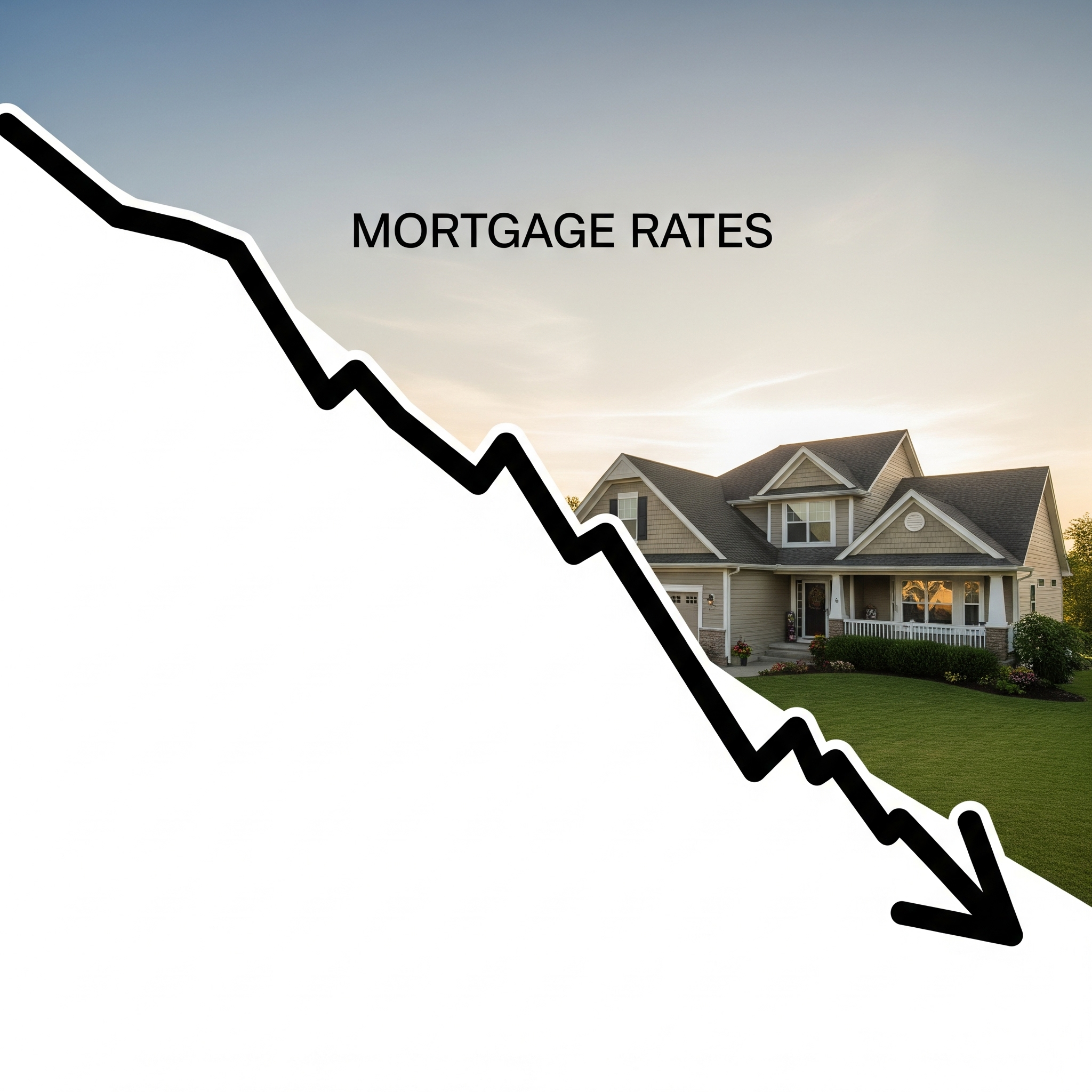
A Shift on the Horizon: The 2026 Housing Market Forecast
The 2026 Housing Market: A Comprehensive Forecast on Mortgage Rates & Inventory
The housing market has been locked in a state of unprecedented gridlock for years, a direct result of the sharp rise in mortgage rates and the subsequent “lock-in effect” on homeowners. However, a growing consensus among leading real estate experts, including those at Berkshire Hathaway HomeServices and institutions like Fannie Mae, points to a significant shift on the horizon. While the remainder of 2025 is expected to bring more of the same market headwinds, the year 2026 is being widely forecasted as a turning point—a period of moderate, but meaningful, relief for homebuyers and sellers alike. This in-depth analysis delves into the intricate web of economic factors, federal policies, and market dynamics that are shaping this pivotal forecast, revealing a more nuanced picture than a simple decline in rates. It’s a complex narrative of a market recalibrating itself in response to new economic realities.
The 2026 Mortgage Rate Forecast: A Moderate Downward Trend
The most compelling aspect of the 2026 forecast is the projected decline in mortgage rates. After years of rates hovering stubbornly in the high 6% to 7% range, experts anticipate a modest but crucial decrease. For instance, recent forecasts from Fannie Mae’s Economic and Strategic Research Group have revised their outlook, predicting the average 30-year fixed-rate mortgage could settle around 6.0% by the end of 2026. This is a notable improvement from the 6.5%-7% range anticipated for the close of 2025 and is viewed as the primary catalyst for a market recovery.
To understand why this is a pivotal prediction, it’s essential to examine the core mechanisms that influence mortgage rates. While the mortgage market is complex, it is primarily driven by two key factors: the Federal Reserve’s monetary policy and the yield on the 10-year Treasury note.
The Federal Reserve’s Role: A Tightrope Walk to Stability
The Federal Reserve’s decisions on the federal funds rate have a powerful ripple effect throughout the economy. While the federal funds rate doesn’t directly dictate mortgage rates, it sets the stage for a lender’s cost of capital. The Fed’s primary objective is to maintain price stability (keeping inflation around 2%) and maximum employment. For the past few years, the Fed has been fighting persistent inflation, which peaked at over 9% in 2022. To combat this, they aggressively raised the federal funds rate, which in turn made all forms of borrowing, including mortgages, more expensive.
As inflation continues to cool and moves closer to the Fed’s target, the central bank is expected to cease its rate-hiking policy. In fact, many economists predict the Fed will begin to implement rate cuts in late 2025 or throughout 2026. This would signal a cooling economy and a renewed focus on employment, both of which are conducive to lower interest rates. However, this is a delicate balancing act; cutting rates too soon could reignite inflation, while holding them too high for too long could trigger a recession. The Fed’s political independence is a crucial aspect of this process, but the outcome of the upcoming presidential election could introduce new pressures and policy priorities, creating an element of uncertainty that could alter this forecast.
The 10-Year Treasury Yield: A Benchmark for Long-Term Rates
The yield on the 10-year Treasury note is a more direct and reliable benchmark for long-term mortgage rates. Lenders use this yield as a pricing floor, adding a spread to cover risk and profit. A common rule of thumb is that the 30-year fixed-rate mortgage is roughly 1.5 to 2 percentage points higher than the 10-year Treasury yield. The yield on these government bonds is influenced by investor sentiment, which in turn is driven by expectations for economic growth and inflation. When investors are concerned about a slowing economy, they tend to flock to the safety of government bonds, which drives up their price and pushes their yield down.
A predicted slowing of U.S. GDP growth in 2026 could lead to a decrease in Treasury yields. As of early August 2025, the 10-year Treasury yield has been easing, but it still reflects a degree of economic uncertainty. If the economic trajectory follows the consensus forecast of a cooling, but not collapsing, economy, the bond market will likely price in lower yields, which would translate directly to more favorable mortgage rates in 2026.
Unlocking the Market Gridlock: Inventory and Affordability
For years, the housing market has been defined by a deep-seated “lock-in effect.” Homeowners who refinanced or purchased homes during the pandemic boom secured record-low mortgage rates, often in the 2%-3% range. With rates now significantly higher, these homeowners have been reluctant to sell, knowing that their next mortgage would come with a much steeper monthly payment. This phenomenon has created an unprecedented housing inventory shortage, keeping a lid on the number of available homes and fueling persistent price appreciation.
The modest drop in mortgage rates coming in 2026 is expected to be the key that finally unlocks this gridlock.
A Flood of Pent-Up Inventory 🏡
As rates fall below the 6.5% threshold and approach the 6.0% mark, the financial disincentive to sell for many homeowners will begin to wane. This is anticipated to release a significant amount of pent-up inventory into the market. Realtor.com data from July 2025 showed that while inventory was up year-over-year, it still remained 13.4% below pre-pandemic levels, with significant regional disparities. The influx of new listings in 2026 would create more options for buyers and introduce much-needed competition among sellers, leading to a more balanced market.
Shifting Home Prices: From Surge to Stabilization
While increased inventory typically puts downward pressure on home prices, most experts do not foresee a dramatic price crash. Instead, the consensus from firms like Berkshire Hathaway HomeServices suggests that home price growth will slow down significantly. Fannie Mae’s forecast for 2026 anticipates a more moderate annual appreciation rate, moving from the rapid pace of the past few years to a more sustainable, single-digit growth.
For buyers, this is a crucial development. A combination of lower mortgage rates and a moderation in home price growth will provide a significant boost to affordability. For sellers, it’s a recalibration of expectations—moving from a period of intense bidding wars and sky-high prices to a more normalized market where homes are still appreciating, just at a healthier, more sustainable pace.
The Persistent Affordability Challenge
Despite these positive trends, a major affordability issue will persist, especially for first-time homebuyers. The lack of affordable housing inventory, particularly homes priced for households earning the median income, is a long-standing issue that will not be solved by a slight drop in rates alone. A 2025 report by the National Association of Realtors (NAR) noted that only a fraction of listings are affordable for a typical household, a stark contrast to pre-pandemic levels. This is a complex problem rooted in years of under-building, and it is being compounded by the high cost of construction.
Tariffs on key building materials, as well as a persistent labor shortage in the construction industry, have driven up the cost of new home construction. While homebuilders are eager to capitalize on the anticipated increase in demand, these cost pressures make it difficult to build the entry-level homes that the market so desperately needs. New home sales are expected to rebound in 2026, but labor shortages and high land costs will still present significant challenges, meaning new inventory will likely focus on higher-priced homes.
The Broader Economic Context: Beyond Rates
The changes expected in 2026 are part of a larger economic and political narrative. Here are some of the other factors that will influence the housing market:
- Political Shifts and Policy: The outcome of the 2024 presidential election could have a profound impact on housing and economic policy. A new administration could introduce changes to tax policies, regulations on federal housing agencies like Fannie Mae and Freddie Mac, and trade policies that affect the cost of building materials. For instance, a policy shift on tariffs could significantly lower construction costs and help address the affordability crisis. Conversely, political uncertainty itself can affect market sentiment and lead to fluctuations in interest rates.
- Regional Disparities: The housing market is not uniform. The national forecast for softening prices and lower rates will manifest differently across the country. Data from mid-2025 shows a clear divide:
- South and West: These regions saw rapid population growth and home price appreciation during the pandemic. As inventory recovers, these markets are starting to cool, with some areas even seeing modest price declines. Builder confidence in the South and West has been slightly lower as the market moderates.
- Northeast and Midwest: These regions continue to struggle with historically low inventory, a problem exacerbated by stricter zoning laws and a slower pace of new construction. Home prices in these areas remain “sticky” and are less likely to fall, even as rates decline, due to the persistent supply shortage.
- Builder Confidence and New Construction: The National Association of Home Builders/Wells Fargo Housing Market Index (HMI) has been a key indicator of builder sentiment. While the HMI has shown some recent signs of stabilization, it remains well below the neutral benchmark of 50. A slight decrease in mortgage rates could be the boost builders need to accelerate new home construction, which is a key component of solving the long-term affordability crisis. New home sales are expected to rebound in 2026, but labor shortages and high land costs will still present challenges.
In summary, while the end of 2025 may feel like a continuation of the same market frustrations, mortgage rate changes coming in 2026 offer a glimmer of hope. It’s a complex forecast of moderate relief, where a gradual decline in rates, a slow increase in inventory, and a potential stabilization of home prices could finally restore some balance to the housing market. For both buyers and sellers, this period represents a pivotal opportunity to re-engage with a market that, for the first time in years, may be working in their favor.
Shop Rates
Mortgage lender in Nashville, Tennessee
Address: 3511 Gallatin Pike Suite 317, Nashville, TN 37207
Phone: (888) 396-7284
https://shoprates.com/
https://x.com/shopratesinc
https://www.facebook.com/shopratesinc
https://www.instagram.com/shopratesinc
https://pinterest.com/shoprates2025
https://sites.google.com/view/shop-rates
https://www.youtube.com/@ShopRates
https://shopratesinc.blogspot.com/
https://medium.com/@shoprates
https://www.yelp.com/biz/shop-rates-nashville
https://gettr.com/user/shoprates


