
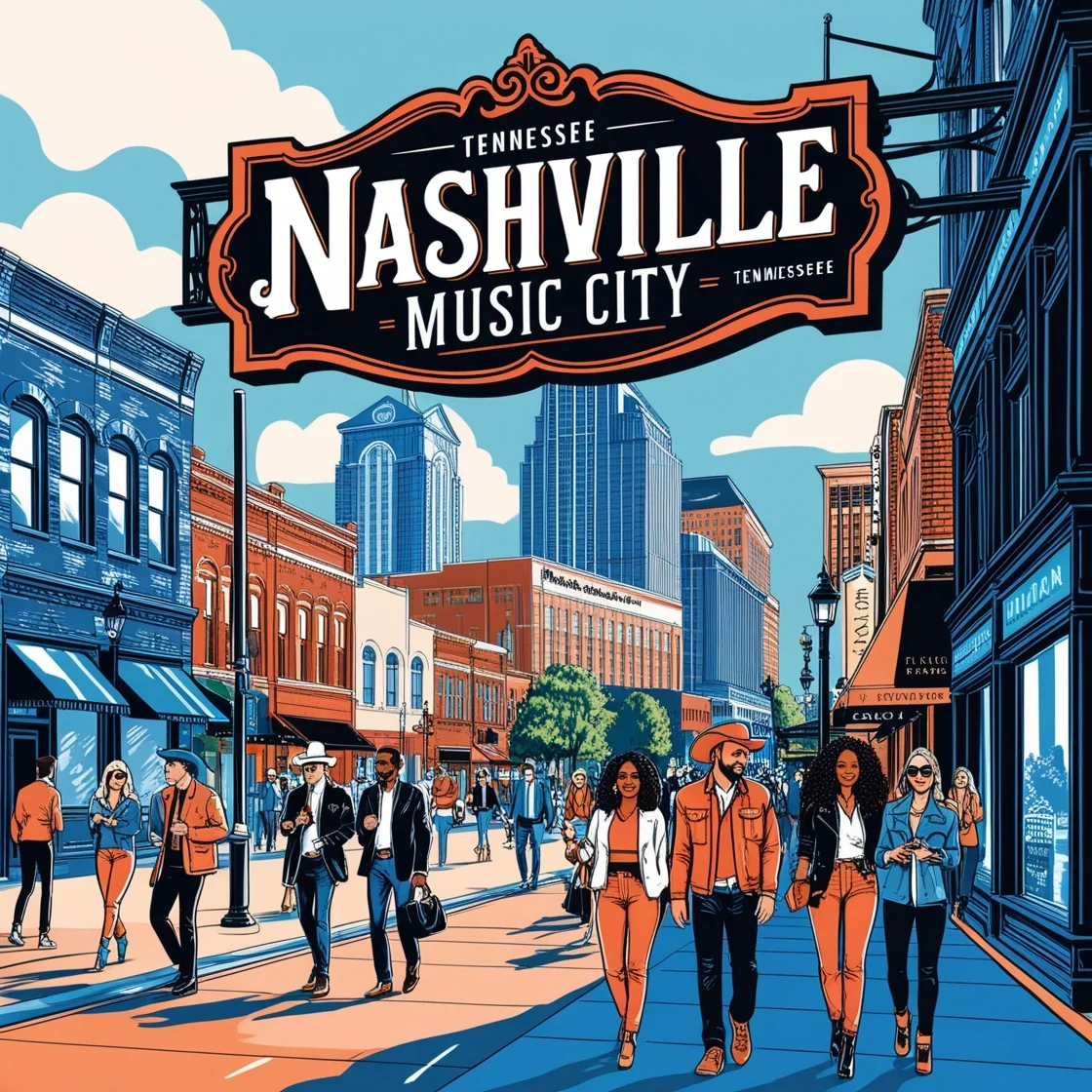
The Impact of Tourism on Nashville’s Real Estate Market
How Nashville’s Booming Tourism Industry Is Reshaping Property Values, Investment Opportunities, and Neighborhood Character
Nashville, Tennessee—affectionately known as Music City—has experienced a remarkable transformation over the past decade. Once primarily recognized for its country music heritage, the city has evolved into a dynamic urban center with a diverse economy, vibrant cultural scene, and a tourism industry that continues to break records year after year. This tourism boom has had profound implications for Nashville’s real estate market, creating both opportunities and challenges for residents, investors, and city planners alike.
In this comprehensive analysis, we’ll examine the complex relationship between Nashville’s flourishing tourism sector and its increasingly competitive real estate market. From the explosion of short-term rentals to the revitalization of formerly overlooked neighborhoods, the influence of tourism on Nashville’s property landscape is undeniable and multifaceted. As we look ahead to what the future may hold for Nashville real estate in 2025 and beyond, understanding these dynamics becomes increasingly important for anyone with a stake in this rapidly evolving market.
Table of Contents
- Nashville’s Tourism Evolution: From Music City to Destination Hotspot
- The Numbers: Tourism Growth and Real Estate Metrics
- Short-Term Rentals: The Airbnb Effect on Nashville Housing
- Neighborhood Transformations: Winners and Losers
- Commercial Real Estate: Hotels, Entertainment Venues, and Retail
- Infrastructure and Public Investment
- Local Regulations and Policy Responses
- Affordability Concerns and Community Impact
- Investment Opportunities in Nashville’s Tourism-Driven Market
- Looking Ahead: Nashville Real Estate Projections for 2025 and Beyond
- Frequently Asked Questions About Nashville’s Tourism and Real Estate
Nashville’s Tourism Evolution: From Music City to Destination Hotspot
The story of Nashville’s transformation from a niche music industry town to a global tourism destination offers essential context for understanding its real estate evolution. While the city has long been known for its country music heritage centered around the Grand Ole Opry and Music Row, the past fifteen years have seen Nashville redefine itself with a broader appeal.
The Catalyst Years: 2010-2015
The early 2010s marked a turning point for Nashville’s national profile. The eponymous ABC television drama “Nashville,” which premiered in 2012, showcased the city’s picturesque urban landscape and music scene to millions of viewers. Concurrently, the city was experiencing a culinary renaissance, with acclaimed chefs opening restaurants that gained national recognition.
During this period, tourism numbers began their steady climb, with annual visitor counts increasing approximately 5% year over year. The Nashville Convention & Visitors Corp reported that by 2014, tourism had become a $5 billion industry for the city, supporting over 50,000 jobs. This influx of visitors created immediate pressure on hotel accommodations, leading to the first wave of hotel development projects.
Real estate investors took notice. Areas like The Gulch, once an industrial railway yard, were transformed into upscale urban districts featuring luxury condominiums, boutique hotels, and high-end retail—developments explicitly designed to appeal to both tourists and affluent locals.
The Boom Years: 2016-2020
By 2016, Nashville had firmly established itself as a premier destination for bachelor and bachelorette parties, corporate conventions, and music festivals. Annual tourism numbers exceeded 14.5 million visitors by 2019, contributing over $7 billion to the local economy. Downtown Nashville, particularly Lower Broadway, evolved into an entertainment district dominated by celebrity-owned bars and music venues.
This period saw explosive growth in both residential and commercial real estate. According to data from the Greater Nashville Realtors, median home prices increased by nearly 50% between 2015 and 2020. The downtown core experienced a hotel boom, with room inventory nearly doubling during this five-year period. Neighborhoods adjacent to tourist hotspots, such as East Nashville, 12South, and Germantown, saw property values skyrocket as their proximity to attractions made them desirable for both short-term rentals and permanent residences.
Pandemic Disruption and Recovery: 2020-2023
The COVID-19 pandemic temporarily halted Nashville’s tourism momentum in 2020, with visitor numbers dropping by approximately 60%. This sudden pause created a brief cooling in the real estate market, particularly for properties heavily dependent on tourism income. Short-term rental owners faced significant financial pressure, and some hotel developments were put on hold.
However, Nashville demonstrated remarkable resilience. By mid-2021, tourists were returning in substantial numbers, drawn by the city’s outdoor entertainment options and relatively relaxed pandemic restrictions. The real estate market not only recovered but accelerated, partly driven by Nashville’s appeal to remote workers seeking relocation from higher-cost urban centers.
Data from the Nashville Convention & Visitors Corp indicated that by 2022, tourism numbers had not only recovered but exceeded pre-pandemic levels, with approximately 16 million visitors generating over $8 billion in economic impact. This recovery coincided with a renewed surge in real estate prices, with the Nashville metropolitan area experiencing some of the fastest home price appreciation in the nation.
Current Landscape: 2023-Present
Today, Nashville’s tourism industry continues to evolve and expand. Major new attractions, including the National Museum of African American Music (opened in 2021) and the expanded Nashville Yards development, have added to the city’s appeal. Annual visitor counts are projected to reach 18 million by the end of 2024, according to industry forecasts.
This sustained tourism growth continues to shape Nashville’s real estate market in profound ways, influencing everything from zoning decisions to investment patterns to neighborhood character. Understanding these impacts requires a deeper examination of specific market segments and dynamics, which we’ll explore in the following sections.
The Numbers: Tourism Growth and Real Estate Metrics
To understand the relationship between tourism and real estate in Nashville, it’s essential to examine the data that illustrates this connection. The following metrics demonstrate how tourism growth correlates with real estate trends across different market segments.
Tourism Growth Indicators
Nashville’s tourism industry has demonstrated remarkable growth over the past decade:
- Visitor Volume: Annual visitors increased from approximately 11 million in 2012 to an estimated 17.5 million in 2023, representing a nearly 60% increase over a decade.
- Tourism Revenue: Direct visitor spending grew from $4.6 billion in 2012 to over $8.8 billion in 2023, according to data from the Nashville Convention & Visitors Corp.
- Hotel Performance: Nashville’s hotel occupancy rates consistently outperformed the national average, reaching 73.8% in 2023 compared to the national average of 66.2%. Average daily rates for Nashville hotels increased by approximately 65% between 2012 and 2023.
- Convention Business: The Music City Center, which opened in 2013, has hosted over 2,000 events and generated more than $3 billion in economic impact through 2023.
Residential Real Estate Metrics
The growth in tourism has coincided with significant changes in Nashville’s residential real estate market:
- Home Price Appreciation: According to data from the Greater Nashville Realtors, the median sales price for single-family homes in the Nashville metropolitan area increased from $195,000 in 2013 to approximately $450,000 by the end of 2023—a 131% increase over a decade.
- Neighborhood Disparities: Areas close to tourism hotspots have seen even more dramatic appreciation. For example, properties in East Nashville appreciated by approximately 180% during the same period, while homes in 12South saw values increase by over 200%.
- Construction Activity: Residential building permits in Davidson County increased by approximately 85% between 2013 and 2023, with much of this activity concentrated in areas popular with tourists and short-term rentals.
- Rental Market Impact: Average monthly rent for a one-bedroom apartment in Nashville increased from approximately $850 in 2013 to over $1,600 by 2023, representing an 88% increase—significantly outpacing wage growth during the same period.
Short-Term Rental Growth
The proliferation of short-term rentals has been one of the most direct ways tourism has impacted Nashville’s housing market:
- Listing Volume: Active short-term rental listings in Nashville grew from fewer than 1,000 in 2014 to over 11,000 by 2023, according to data from AirDNA and the Nashville Planning Department.
- Revenue Generation: The average annual revenue for a short-term rental property in Nashville reached approximately $36,000 in 2023, creating a strong financial incentive for property owners to convert long-term housing to tourist accommodations.
- Geographic Concentration: By 2023, approximately 28% of all housing units in some downtown-adjacent zip codes were operating as short-term rentals at least part of the year.
Commercial Real Estate Trends
Tourism has dramatically reshaped Nashville’s commercial real estate landscape:
- Hotel Development: Hotel room inventory in Nashville increased from approximately 26,000 rooms in 2013 to over 40,000 by 2023, with another 5,000 rooms under construction or in the planning stages.
- Retail Transformation: Retail vacancy rates in tourism-heavy districts like The Gulch, Downtown, and 12South dropped to below 2% by 2023, while retail rents in these areas increased by an average of 75% over the past decade.
- Restaurant Growth: The number of restaurant licenses issued in Davidson County increased by approximately 60% between 2013 and 2023, with concentrations in tourist-friendly neighborhoods.
These statistics demonstrate the clear correlation between Nashville’s tourism boom and its real estate transformation. The relationship is complex and multidirectional—tourism drives real estate demand, while real estate development creates new attractions and accommodations that further boost tourism appeal.
Short-Term Rentals: The Airbnb Effect on Nashville Housing
Perhaps no aspect of Nashville’s real estate market has been more directly impacted by tourism than the explosive growth of short-term rentals (STRs). Platforms like Airbnb and Vrbo have fundamentally altered the dynamics of Nashville’s housing market, creating both opportunities and challenges for various stakeholders.
The Scale of Nashville’s STR Market
Nashville has emerged as one of the nation’s most active short-term rental markets relative to its size. Consider these metrics:
- As of early 2024, Nashville had approximately 11,500 active short-term rental listings, according to data from AirDNA and the Metro Nashville Codes Department.
- Nearly 70% of these listings are entire homes or apartments rather than private rooms, meaning these units are effectively removed from the long-term housing market.
- The average nightly rate for a Nashville short-term rental reached $245 in 2023, making it one of the most profitable STR markets in the Southeast.
- Weekend occupancy rates for Nashville STRs frequently exceed 90% during peak tourism months, generating substantial income for property owners.
Financial Incentives and Investment Patterns
The economics of short-term rentals in Nashville have created powerful incentives for property investors:
- A three-bedroom home in popular neighborhoods like East Nashville or 12South can generate between $40,000 and $60,000 annually as a short-term rental—significantly more than the $24,000 to $30,000 it might earn as a traditional long-term rental.
- This revenue differential has prompted many investors to purchase properties specifically for STR use, competing directly with potential homeowners and traditional renters.
- Investment groups and limited liability companies owned approximately 43% of all permitted STRs in Nashville by 2023, indicating the professionalization of what was once a “sharing economy” concept.
- The promise of STR income has been factored into property valuations, with homes that have STR permits often selling for 15-20% premiums compared to similar properties without permits.
Neighborhood Impact
The concentration of short-term rentals has dramatically altered the character and housing economics of several Nashville neighborhoods:
- Downtown/Midtown: In some census tracts near downtown Nashville, as many as 30% of all housing units were operating as STRs by 2023, effectively turning residential buildings into de facto hotels.
- East Nashville: This historically working-class area has seen some of the city’s most dramatic gentrification, with STRs serving as both a cause and effect of this transformation. By 2023, approximately 15% of housing units in parts of East Nashville were operating as STRs.
- 12South: Once a residential neighborhood with neighborhood-serving businesses, 12South has transformed into a tourist destination with Instagram-worthy murals, boutiques, and craft breweries. Housing prices have more than tripled since 2010, partly driven by STR potential.
- Wedgewood-Houston: This formerly industrial area has become an arts district and increasingly popular location for STRs, with property values rising accordingly.
Regulatory Response
Nashville’s government has struggled to balance the economic benefits of STRs with their impact on housing affordability and neighborhood character:
- The city first implemented STR regulations in 2015, creating a permit system and distinguishing between owner-occupied and non-owner-occupied properties.
- In 2018, the city enacted stricter regulations, including a gradual phase-out of non-owner-occupied STRs in residential zones. However, state legislation soon preempted parts of this ordinance, limiting the city’s regulatory authority.
- Current regulations include a 3% cap on non-owner-occupied STRs in any census tract, though areas that had exceeded this threshold before the regulation was implemented were grandfathered in.
- Enforcement challenges remain, with an estimated 20-30% of Nashville STRs operating without proper permits as of 2023.
The Future of STRs in Nashville
Looking ahead to 2025 and beyond, several trends appear likely to shape Nashville’s short-term rental landscape:
- Increasing professionalization, with more properties managed by specialized companies rather than individual homeowners
- Continued concentration in mixed-use and commercially zoned areas where regulatory restrictions are fewer
- Growing integration with hotel development, as some new projects incorporate both traditional hotel rooms and condo units designed for STR use
- Potential for more sophisticated regulations that better balance economic opportunity with housing affordability concerns
The short-term rental phenomenon represents one of the most direct ways that tourism impacts real estate markets. In Nashville, this relationship has reshaped not just property values but the very composition and character of entire neighborhoods.
Neighborhood Transformations: Winners and Losers
Nashville’s tourism boom has transformed neighborhoods across the city, though the nature and extent of these changes vary dramatically. Some areas have experienced revitalization and economic growth, while others face challenges related to displacement and character loss. This uneven distribution of benefits and burdens reveals the complex relationship between tourism and neighborhood change.
Gentrification Hotspots
Several Nashville neighborhoods have undergone dramatic gentrification directly linked to tourism:
East Nashville
Once considered Nashville’s bohemian district, East Nashville has experienced perhaps the most profound tourism-related transformation:
- Median home values increased from approximately $165,000 in 2012 to over $450,000 by 2023
- The neighborhood’s Five Points area evolved from a local hangout to a tourist destination featuring craft cocktail bars, boutique shops, and high-end restaurants
- Long-time residents have faced significant property tax increases, with assessments rising by an average of 37% in the 2021 reappraisal alone
- The area’s artistic character, which initially attracted visitors, has been partially displaced as rising costs forced out many creative professionals
12South
This formerly residential neighborhood has become one of Nashville’s most Instagram-worthy tourist destinations:
- Commercial rents along 12th Avenue South increased by over 200% between 2012 and 2023
- Local-serving businesses like hardware stores and laundromats have been replaced by tourist-oriented boutiques, restaurants, and bars
- The median home price reached approximately $850,000 by 2023, up from $275,000 in 2012
- The area now features multiple “selfie spots” including murals and neon signs specifically designed to attract social media-savvy tourists
The Gulch
Once an industrial area with abandoned warehouses, The Gulch has been completely reinvented as an upscale urban district:
- Luxury condominiums now dominate the area, with prices frequently exceeding $600 per square foot
- The neighborhood has become a hub for high-end hotels catering to affluent tourists
- National retail chains have largely replaced local businesses
- The area exemplifies successful urban redevelopment but has created virtually no affordable housing options
Emerging Tourism Districts
As established areas become saturated and increasingly expensive, tourism impacts have spread to formerly overlooked neighborhoods:
Wedgewood-Houston
This formerly industrial area south of downtown has emerged as an arts district and increasingly popular tourist destination:
- Warehouse spaces have been converted to galleries, breweries, and entertainment venues
- Median home prices increased by approximately 150% between 2015 and 2023
- New residential development increasingly markets proximity to tourism amenities as a selling point
- The area represents a “second wave” of tourism-driven gentrification
Nations
Located in West Nashville, this historically working-class neighborhood has begun experiencing tourism spillover effects:
- Short-term rental conversions increased by over 300% between 2019 and 2023
- New mixed-use developments explicitly market proximity to downtown attractions
- Property values increased by approximately 85% between 2017 and 2023
- Long-time residents have expressed concerns about maintaining the neighborhood’s character and affordability
Communities Facing Displacement
Tourism-related development has created particular challenges for historically disadvantaged communities:
North Nashville
This historically Black community has faced significant pressures related to tourism-adjacent development:
- Proximity to downtown has made the area attractive for investors seeking short-term rental opportunities
- Property tax burdens have increased substantially for long-time residents, many of whom are on fixed incomes
- Cultural landmarks and businesses significant to Nashville’s African American community have faced displacement
- Community activists have successfully preserved some historical sites, including the Fisk University campus
Edgehill
Located between downtown and Music Row, this historically diverse neighborhood has experienced intense redevelopment pressure:
- The area’s location between major tourism districts has made it particularly vulnerable to speculative investment
- Approximately 60% of the neighborhood’s affordable housing stock has been lost since 2010
- Displacement of long-time residents has accelerated, with the Black population declining from 68% in 2000 to approximately 28% by 2023
- Community organizations have fought for community benefits agreements with mixed success
Community Responses and Preservation Efforts
As tourism impacts spread across Nashville, various communities have developed strategies to manage change:
- Formation of neighborhood conservation districts with design guidelines that help preserve architectural character
- Community land trusts to maintain affordable housing in gentrifying areas
- Local business alliances that promote independently owned establishments rather than tourist-oriented chains
- Cultural heritage initiatives that document and preserve neighborhood history
The transformation of Nashville’s neighborhoods highlights both the opportunities and challenges created by tourism-driven development. While some areas have benefited from renewed investment and economic activity, others have experienced displacement and loss of community character. As Nashville looks toward 2025 and beyond, finding ways to distribute the benefits of tourism more equitably across neighborhoods remains a critical challenge.
Commercial Real Estate: Hotels, Entertainment Venues, and Retail
Tourism’s impact on Nashville’s commercial real estate sector has been profound, reshaping the city’s skyline, commercial corridors, and entertainment districts. This transformation reflects both the scale of Nashville’s tourism economy and investors’ confidence in its continued growth.
Hotel Development Boom
Nashville’s hotel sector has experienced remarkable expansion in response to growing tourist demand:
- Inventory Growth: Hotel room inventory in Nashville increased from approximately 26,000 rooms in 2013 to over 40,000 by 2023, representing a 54% increase in a decade.
- Downtown Concentration: The downtown core added more than 8,000 hotel rooms between 2015 and 2023, with major projects including the 33-story Grand Hyatt Nashville (591 rooms), the JW Marriott (533 rooms), and The Joseph (297 rooms).
- Boutique Trend: Beyond the major flags, Nashville has attracted numerous boutique hotel concepts, including the Soho House, Graduate Nashville, and several Moxy locations, each designed to offer distinctive experiences that align with Nashville’s creative image.
- Extended Pipeline: As of early 2024, approximately 5,000 additional hotel rooms were either under construction or in the planning stages in Nashville, suggesting continued investor confidence in tourism growth.
- Financial Performance: Nashville hotels have consistently outperformed national averages in key metrics. In 2023, Nashville’s RevPAR (Revenue Per Available Room) was approximately $145, compared to the national average of $97.
Entertainment Venue Expansion
Nashville’s identity as “Music City” has been reinforced through significant investment in entertainment venues:
- Broadway Evolution: Lower Broadway has transformed from a struggling district in the early 2000s to an entertainment powerhouse lined with celebrity-owned bars and music venues. Property values along this strip have increased by over 300% since 2010.
- New Music Venues: Major new music venues have opened to accommodate growing demand, including the 6,000-capacity Ascend Amphitheater (opened in 2015), the renovated Municipal Auditorium, and numerous mid-sized venues throughout the city.
- Diversification: Entertainment options have expanded beyond music to include attractions like the National Museum of African American Music (opened in 2021), TopGolf, and numerous experiential entertainment concepts designed to appeal to visitors.
- Mixed-Use Developments: Projects like Nashville Yards and Fifth + Broadway have incorporated entertainment components as central elements of their design, reflecting the drawing power of experiential attractions.
Retail Transformation
Tourism has dramatically altered Nashville’s retail landscape, particularly in high-traffic visitor areas:
- Tourist-Oriented Retail: Areas like Broadway, The Gulch, and 12South have seen local-serving businesses replaced by tourism-focused retail, including Nashville-branded merchandise shops, high-end boutiques, and specialty food retailers.
- Rent Premium: Commercial retail spaces in tourism-heavy districts command rents 40-70% higher than comparable spaces in non-tourist areas of the city.
- Local vs. National: While some local retailers have capitalized on tourism by expanding or repositioning their offerings, many smaller businesses have been displaced by national chains that can afford premium rents in high-visibility locations.
- Experiential Retail: Stores increasingly incorporate experiential elements to attract tourists, with examples including boot shops offering custom fittings, distilleries with tasting rooms, and stores hosting live music performances.
Restaurant and Bar Scene
Nashville’s culinary landscape has been perhaps the most visibly transformed commercial sector:
- Numerical Growth: The number of food service establishments in Davidson County increased by approximately 60% between 2013 and 2023.
- Investment Scale: High-profile restaurateurs and celebrity chefs have invested heavily in Nashville, with typical build-out costs for upscale restaurants in premium locations often exceeding $2 million.
- Concept Targeting: Many new dining establishments explicitly target tourist demographics, with concepts and price points designed to appeal to visitors rather than locals.
- Competitive Pressures: While the tourism boom has created opportunities for restaurateurs, it has also intensified competition and raised operating costs. An estimated 30% of new restaurants in Nashville close within their first two years.
Mixed-Use Developments
Several large-scale mixed-use projects have reshaped Nashville’s commercial landscape while catering to tourism:
- Fifth + Broadway: This $450 million development, completed in 2021, includes 235,000 square feet of retail and entertainment space, 381 residential units, and office space on the site of the former Nashville Convention Center.
- Nashville Yards: This 18-acre development includes the Grand Hyatt hotel, entertainment venues, retail, office space, and residential components, with a total investment exceeding $1 billion.
- River North: This emerging district along the Cumberland River’s east bank is being positioned as Nashville’s next major mixed-use development area, with plans including hotels, office space, residential units, and entertainment venues.
Office Market Dynamics
While less directly tied to tourism than hotels and entertainment venues, Nashville’s office market has also been influenced by the city’s visitor economy:
- Music Industry Expansion: Traditional music business areas like Music Row have seen substantial reinvestment, with office rents increasing by approximately 45% between 2015 and 2023.
- Tourism Business Growth: Companies servicing the tourism industry, including event planners, marketing firms, and hospitality management companies, have expanded their Nashville footprints.
- Corporate Relocations: Nashville’s growing profile as a destination city has contributed to its appeal for corporate relocations and expansions, including AllianceBernstein’s decision to move its headquarters from New York to Nashville in 2018.
The transformation of Nashville’s commercial real estate landscape demonstrates how thoroughly tourism has reshaped the city’s built environment. As Nashville looks toward 2025 and beyond, the continued evolution of its commercial spaces will both reflect and reinforce its identity as a premier destination city.
Infrastructure and Public Investment
Nashville’s tourism boom has necessitated significant infrastructure development and public investment to accommodate growing visitor numbers while maintaining quality of life for residents. These investments have far-reaching implications for the city’s real estate market, influencing development patterns, property values, and neighborhood accessibility.
Transportation Infrastructure
The influx of tourists has placed considerable pressure on Nashville’s transportation systems, prompting various improvements:
- Airport Expansion: Nashville International Airport (BNA) completed a $1.4 billion expansion in 2023, increasing capacity to 25 million annual passengers, up from 14 million in 2013. The project included a new international arrivals facility, additional concourses, and expanded parking.
- Road Improvements: Major thoroughfares connecting tourist districts have received significant upgrades, including the $62 million Division Street extension and bridge completed in 2021, which improved access between The Gulch and SoBro districts.
- Transit Challenges: While Nashville’s tourism economy has boomed, the city has struggled to develop adequate mass transit. A proposed $5.4 billion transit plan was rejected by voters in 2018, leaving the city heavily dependent on cars and ride-sharing services.
- Pedestrian Infrastructure: High-traffic tourist areas have seen substantial investments in pedestrian amenities, including the $18 million Broadway streetscape improvement project completed in 2022, which widened sidewalks and added pedestrian safety features.
Convention and Tourism Facilities
Public investment in tourism-oriented facilities has been substantial:
- Music City Center: This $623 million convention center, which opened in 2013, has been a catalyst for downtown development. The 2.1 million square foot facility hosts approximately 300 events annually and has generated billions in economic impact.
- Nissan Stadium Redevelopment: Plans for a new or substantially renovated stadium for the Tennessee Titans include tourism-oriented components such as a hotel, entertainment district, and improved connections to downtown. The project, still in planning stages, could cost upwards of $2 billion, with significant public financing.
- Riverfront Development: The city has invested more than $52 million in riverfront parks and amenities since 2015, creating public spaces that serve both tourists and residents while increasing adjacent property values.
- Public Performance Venues: Facilities like the Ascend Amphitheater (opened in 2015 at a cost of $52 million) have expanded Nashville’s capacity to host performances and events that attract visitors.
Public Utilities and Services
Tourism growth has necessitated upgrades to basic infrastructure systems:
- Water and Sewer: The Metro Water Services has invested approximately $200 million since 2018 in upgrading capacity in high-growth areas, with costs partially passed on through impact fees for new development.
- Electrical Grid: The Nashville Electric Service has undertaken significant upgrades to accommodate growing power demands in tourism districts, particularly for large hotels and entertainment venues.
- Public Safety: Police and fire services have been expanded in tourism-heavy areas, with the Downtown Precinct receiving additional officers and equipment to manage the increased visitor population.
Impact on Real Estate Development
These public investments have directly influenced real estate development patterns:
- Value Creation: Properties near public infrastructure improvements have seen value increases exceeding market averages. For example, properties adjacent to the riverfront parks have appreciated approximately 25% faster than comparable properties elsewhere in the city.
- Development Incentives: The city has used tax increment financing (TIF) and other incentive programs to encourage development in targeted areas, particularly those that support tourism. Since 2015, Nashville has approved TIF districts that have facilitated over $3 billion in development.
- Opportunity Zones: Several Nashville census tracts designated as Opportunity Zones have seen accelerated investment, particularly in areas adjacent to established tourism districts.
Funding Mechanisms and Fiscal Impacts
Nashville has employed various funding strategies to support tourism-related infrastructure:
- Tourism-Generated Revenue: Hotel occupancy taxes, which increased from 6% to 8% in 2019, generated approximately $125 million in 2023, funding convention center operations, tourism marketing, and some general infrastructure projects.
- Tax Increment Financing: TIF has been used extensively to fund public improvements in developing areas, with outstanding TIF debt of approximately $600 million as of 2023.
- Public-Private Partnerships: Projects like Fifth + Broadway were developed through partnerships between public entities and private developers, with public contributions including land value and infrastructure improvements.
- Bond Issuance: Nashville has issued general obligation bonds for various infrastructure projects, with the city’s outstanding debt increasing by approximately 45% between 2013 and 2023.
Future Infrastructure Needs
Looking ahead to 2025 and beyond, Nashville faces several infrastructure challenges related to tourism growth:
- Transit Solutions: The lack of robust mass transit remains a significant challenge, with congestion impacting both visitor experience and resident quality of life. New proposals for light rail or bus rapid transit corridors are under development.
- Sustainable Infrastructure: Climate resilience has become a greater focus following Nashville’s 2010 flood and subsequent severe weather events. Future infrastructure investments will likely incorporate more green infrastructure and flood mitigation measures.
- Balanced Investment: Ensuring that infrastructure spending benefits residential neighborhoods, not just tourist districts, remains a challenge and a source of political tension.
The relationship between public infrastructure investment and real estate development in Nashville illustrates the complex interplay between tourism growth, public spending, and property values. As the city continues to grow as a destination, strategic infrastructure investments will play a crucial role in shaping both the visitor experience and the real estate market.
Local Regulations and Policy Responses
As tourism has transformed Nashville’s real estate landscape, local government has responded with various regulatory and policy measures aimed at managing growth, preserving community character, and addressing affordability concerns. These interventions have significantly influenced development patterns and investment decisions across the city.
Short-Term Rental Regulations
Perhaps the most direct regulatory response to tourism’s impact on housing has been Nashville’s evolving approach to short-term rentals:
- Initial Regulation (2015): Nashville’s first short-term rental ordinance established a permit system and distinguished between owner-occupied (Type 1) and non-owner-occupied (Type 2) properties.
- Attempted Phase-Out (2018): In response to growing concerns about housing affordability and neighborhood character, the Metro Council passed legislation to phase out non-owner-occupied short-term rentals in residential zones by 2021.
- State Preemption: The Tennessee legislature subsequently passed a law preventing Nashville from banning existing non-owner-occupied short-term rentals, though the city retained some regulatory authority.
- Current Framework: Nashville now limits non-owner-occupied STRs to 3% of properties within each census tract in residential areas, though areas that exceeded this threshold before implementation were grandfathered in. All STRs require permits, must pay hotel occupancy taxes, and must comply with various safety and operational requirements.
- Enforcement Challenges: Despite regulatory efforts, an estimated 20-30% of Nashville STRs were operating without proper permits as of 2023, according to data from the Metro Codes Department. Enforcement has been hampered by limited resources and jurisdictional complexities.
Zoning and Land Use Policies
Nashville has employed various zoning tools to manage tourism-related development:
- Downtown Code: The downtown-specific zoning code, updated in 2019, includes provisions for active ground-floor uses, pedestrian amenities, and design standards that promote a vibrant urban environment attractive to both tourists and residents.
- Urban Design Overlays: Several neighborhoods impacted by tourism, including Music Row and portions of East Nashville, have implemented overlay districts with specific design guidelines aimed at preserving neighborhood character while accommodating growth.
- Mixed-Use Zones: The city has expanded opportunities for mixed-use development, particularly along major corridors connecting tourist districts, through rezoning initiatives and the creation of specific mixed-use zoning categories.
- Historic Preservation: Expanded historic district designations have provided some protection against demolition and incompatible development in historic neighborhoods experiencing tourism pressure.
Affordable Housing Initiatives
Rising property values in tourism-impacted neighborhoods have prompted various affordable housing policies:
- Barnes Fund: Nashville’s affordable housing trust fund, established in 2013 and expanded several times since, has allocated over $100 million to support affordable housing development, with some projects specifically targeting tourism-adjacent neighborhoods.
- Inclusionary Housing: A voluntary inclusionary zoning policy was implemented in 2016, offering density bonuses for developments that include affordable units. The program was made mandatory for certain projects in 2020 but remains limited in scope due to state restrictions.
- Community Land Trust: The Nashville Community Land Trust, established in 2019, has begun acquiring properties in gentrifying neighborhoods to maintain permanent affordability, with initial projects in North Nashville and Edgehill.
- Tax Relief Programs: Expanded property tax relief and deferral programs have been implemented to help long-time residents remain in neighborhoods experiencing rapid appreciation due to tourism-driven demand.
Tourism Management
Tourism Management
Beyond housing-specific policies, Nashville has implemented various measures to manage tourism impacts:
- Entertainment District Management: In 2022, Nashville established an Entertainment District Management program with dedicated funding for enhanced maintenance, security, and public space management in high-traffic tourist areas like Lower Broadway.
- Tourism Improvement District: A Tourism Improvement District was created in 2020, generating approximately $10 million annually through a small assessment on hotel rooms, with funds directed toward tourism infrastructure and visitor services.
- Noise Ordinances: In response to resident concerns, Nashville updated its noise ordinances in 2021, establishing stricter standards for entertainment venues in mixed-use areas while maintaining more permissive policies in designated entertainment districts.
- Transportation Management: Tourism-specific transportation policies include designated loading zones for tour buses, rideshare pickup locations, and the regulation of transportation entertainment vehicles (party buses and pedal taverns).
Impact Fees and Fiscal Measures
Nashville has implemented various fiscal tools to ensure tourism-related development contributes to public infrastructure:
- Impact Fees: Development impact fees for water, sewer, and parks were implemented in 2020, requiring new projects to contribute more directly to infrastructure costs.
- Tax Increment Financing: TIF districts have been used strategically to capture increased property tax revenue from tourism-driven development and reinvest it in public infrastructure.
- Dedicated Revenue Streams: Nashville now allocates a portion of hotel tax revenue directly to affordable housing initiatives, creating a mechanism for tourism to help address its impact on housing affordability.
Policy Effectiveness and Challenges
The effectiveness of Nashville’s regulatory responses has been mixed:
- Implementation Gaps: Limited enforcement resources have undermined the effectiveness of some regulations, particularly short-term rental ordinances.
- State Preemption: Tennessee’s legislature has restricted Nashville’s regulatory authority in several areas, including short-term rentals, inclusionary zoning, and rent control.
- Balancing Interests: Policies must balance the economic benefits of tourism with concerns about community character and affordability, creating political challenges.
- Market Dynamics: Even well-designed regulations struggle to counter powerful market forces, particularly in areas with strong tourism appeal.
Looking ahead to 2025 and beyond, Nashville will likely continue refining its regulatory approach as tourism impacts evolve and new challenges emerge. The effectiveness of these policies will significantly influence both the real estate market and the city’s ability to maintain the authentic character that attracts visitors in the first place.
Affordability Concerns and Community Impact
While tourism has generated significant economic benefits for Nashville, it has also contributed to substantial affordability challenges and community disruption. These impacts are not evenly distributed, with certain neighborhoods and demographic groups bearing a disproportionate share of the costs associated with Nashville’s tourism boom.
Housing Affordability Crisis
Tourism-driven demand has exacerbated Nashville’s housing affordability challenges:
- Price Escalation: Between 2013 and 2023, median home prices in Nashville increased by approximately 131%, while median household incomes rose by only about 42% during the same period.
- Rental Market Pressure: Average rent for a one-bedroom apartment increased from approximately $850 in 2013 to over $1,600 by 2023, representing an 88% increase—significantly outpacing wage growth.
- Geographic Disparities: Tourism-adjacent neighborhoods have experienced even more dramatic price increases. For example, average rents in East Nashville increased by approximately 110% between 2013 and 2023.
- Housing Burden: According to data from the Nashville Planning Department, approximately 37% of Nashville renters were spending more than 50% of their income on housing by 2023, up from 28% in 2013.
Displacement and Cultural Impact
Rising costs have forced many residents to relocate, disrupting communities and cultural institutions:
- Demographic Shifts: Several historically diverse neighborhoods have experienced significant demographic changes. For example, North Nashville’s Black population decreased from approximately 70% in 2000 to about 45% by 2023.
- Cultural Institution Loss: Rising commercial rents have displaced iconic music venues, artistic spaces, and locally-owned businesses that contributed to Nashville’s authentic character. For example, at least seven music venues on Music Row closed between 2015 and 2023 due to redevelopment or rent increases.
- Community Fragmentation: Long-standing community networks have been disrupted as residents disperse to more affordable areas, often farther from employment centers and lacking the social support systems of established neighborhoods.
- Preservation Challenges: Historic properties and culturally significant sites face redevelopment pressure, particularly in areas with strong tourism appeal. Between 2015 and 2023, more than 50 historically significant buildings were demolished in Nashville despite preservation efforts.
Economic Inequality
Tourism growth has contributed to economic polarization in Nashville:
- Wage Disparities: While tourism has created numerous jobs, many are low-wage positions in hospitality and food service. The average annual wage in Nashville’s accommodation and food service sector was approximately $24,500 in 2023, less than half the city’s median household income.
- Wealth Concentration: Property value appreciation has significantly benefited existing homeowners and real estate investors while creating barriers to entry for first-time homebuyers and creating housing insecurity for renters.
- Geographic Inequality: The benefits of tourism development, including improved infrastructure and new amenities, have been concentrated in certain areas while other neighborhoods continue to lack basic services and investment.
Community Responses and Advocacy
Various community organizations have emerged to address these challenges:
- Housing Advocacy: Groups like the Nashville Affordable Housing Coalition have successfully advocated for increased funding for affordable housing and stronger tenant protections.
- Community Land Trusts: The Nashville Community Land Trust and related organizations have begun acquiring properties to maintain permanent affordability in gentrifying neighborhoods.
- Cultural Preservation Initiatives: Projects like the Jefferson Street Sound Museum and the National Museum of African American Music represent efforts to preserve cultural heritage amid rapid change.
- Neighborhood Organizing: Neighborhood associations have become increasingly sophisticated in negotiating community benefits agreements with developers and advocating for policies that protect existing residents.
Policy Responses and Their Limitations
Local government has implemented various measures to address affordability challenges:
- Affordable Housing Requirements: Some major developments, particularly those receiving public subsidies, now include affordable housing components. For example, the River North development agreed to make 15% of its residential units affordable to households earning less than 80% of area median income.
- Tax Relief Programs: Expanded property tax relief and deferral programs have been implemented to help long-time residents remain in neighborhoods experiencing rapid appreciation.
- Community Benefit Requirements: Large tourism-oriented development projects increasingly face requirements to provide specific community benefits, including affordable housing contributions, local hiring commitments, and public space improvements.
However, these policies face significant limitations:
- Scale Challenges: Current affordable housing production falls far short of need. Between 2018 and 2023, Nashville created approximately 2,800 income-restricted housing units, while estimates suggest the city needs over 30,000 such units to address affordability challenges.
- Funding Constraints: Despite increased investment, affordable housing funding remains inadequate relative to market pressures. The Barnes Fund for Affordable Housing received $10 million in fiscal year 2023, representing less than 0.5% of the city’s overall budget.
- Regulatory Limitations: State law restricts Nashville’s ability to implement certain affordable housing policies, including mandatory inclusionary zoning and rent control.
As Nashville looks toward 2025 and beyond, addressing the negative community impacts of tourism-driven development will remain a critical challenge. The city’s ability to maintain its unique character and diversity—qualities that attract tourists in the first place—may depend on finding more effective strategies to ensure that tourism benefits are more equitably distributed.

Investment Opportunities in Nashville’s Tourism-Driven Market
Despite affordability challenges and growing regulatory complexity, Nashville’s tourism-driven real estate market continues to offer compelling investment opportunities across various sectors. Understanding these opportunities—and their associated risks—is essential for investors considering entry into this dynamic market.
Residential Investment Strategies
Nashville’s residential market presents several investment approaches tied to tourism:
Short-Term Rental Properties
Despite regulatory constraints, short-term rentals remain attractive investments in selected locations:
- Legal Framework: Investors should focus on areas where non-owner-occupied short-term rentals remain permitted, including commercially zoned districts and mixed-use corridors.
- Performance Metrics: Well-located STRs in Nashville typically achieve 65-75% annual occupancy rates with average daily rates ranging from $175 to $350, depending on location, size, and amenities.
- Emerging Locations: While established areas like Downtown and East Nashville face regulatory caps and high acquisition costs, emerging areas like Wedgewood-Houston and Nations offer lower entry points with growing visitor appeal.
- Professional Management: The trend toward professional management has continued, with several Nashville-based companies now specializing in STR optimization and compliance.
Long-Term Rental Properties
Traditional rental properties also benefit from tourism-related dynamics:
- Workforce Housing: Properties targeting employees of Nashville’s tourism sector remain in high demand, particularly in neighborhoods with good transit connections to hospitality job centers.
- Tourism-Adjacent Neighborhoods: Areas within 1-3 miles of major tourist districts often offer the best combination of appreciation potential and steady rental demand.
- Multi-Family Development: Small to mid-sized multi-family projects (15-50 units) in emerging neighborhoods have performed particularly well, benefiting from both tourism-driven employment growth and residents displaced from more expensive areas.
Residential Development
For developers, several tourism-influenced opportunities exist:
- Adaptive Reuse: Converting commercial or industrial buildings to residential use in former warehouse districts like Wedgewood-Houston has proven successful, with projects capitalizing on architectural character and proximity to entertainment districts.
- Missing Middle Housing: Townhomes, duplexes, and small multifamily projects help meet demand in neighborhoods transitioning due to tourism pressure, often offering better returns than single-family development.
- Mixed-Use Infill: Projects combining ground-floor commercial space with residential units above have performed well in neighborhood commercial corridors like Gallatin Avenue in East Nashville and 51st Avenue in The Nations.
Commercial Investment Opportunities
Tourism continues to drive commercial real estate opportunities across various segments:
Hospitality Sector
Nashville’s hotel market remains dynamic despite substantial recent growth:
- Boutique and Lifestyle Hotels: While the luxury hotel market has seen significant development, opportunities remain for boutique concepts in emerging tourist districts and neighborhood commercial nodes.
- Extended Stay Products: With Nashville’s convention business rebounding and corporate relocations continuing, extended stay hotels targeting business travelers have shown strong performance.
- Adaptive Reuse: Converting historic buildings to hospitality use has proven successful, with projects like the Dream Nashville (converted from historic Printers Alley buildings) commanding premium rates.
Food and Beverage Real Estate
Tourism supports various food and beverage real estate investments:
- Restaurant Spaces: Well-configured restaurant spaces in tourism corridors command premium rents, with typical NNN rates ranging from $45-65 per square foot in prime locations as of 2023.
- Food Halls and Collective Concepts: Properties suitable for food hall conversion or multi-vendor concepts have performed well, allowing smaller operators to access tourist traffic without the full overhead of standalone locations.
- Brewery and Distillery Spaces: Nashville’s craft alcohol scene continues to expand, with suitable industrial spaces for production and tasting rooms in high demand.
Entertainment-Oriented Commercial
Beyond traditional retail, entertainment-focused commercial properties offer strong potential:
- Music Venue Spaces: Purpose-built or converted spaces suitable for live music performance remain in demand despite the competitive landscape.
- Experiential Retail: Properties suitable for interactive or experiential retail concepts command premium values, particularly in downtown-adjacent areas.
- Cultural Attraction Spaces: Buildings suitable for museums, galleries, and cultural attractions benefit from Nashville’s diversifying tourism base, which increasingly seeks experiences beyond music and nightlife.
Mixed-Use Development Opportunities
Large-scale mixed-use projects have been particularly successful in Nashville’s tourism economy:
- Entertainment Districts: Planned developments incorporating multiple entertainment venues, food and beverage outlets, and complementary retail have established new tourism nodes beyond downtown.
- Hotel-Anchored Mixed-Use: Projects anchored by hotels but incorporating residential, office, and retail components have performed well by creating 24/7 environments appealing to both visitors and locals.
- Transit-Oriented Development: Sites along existing or planned transit corridors connecting to tourism districts offer strong potential as Nashville continues to address its transportation challenges.
Investment Considerations and Risk Factors
Investors in Nashville’s tourism-influenced real estate market should consider several key factors:
- Regulatory Environment: Nashville’s regulatory landscape continues to evolve, particularly regarding short-term rentals, development incentives, and affordability requirements. Successful investors maintain close relationships with local legal experts to navigate these complexities.
- Market Cycles: While Nashville’s tourism growth has been robust, the market is not immune to cycles. The post-pandemic recovery demonstrated resilience, but investors should stress-test opportunities against potential downturns.
- Infrastructure Constraints: Transportation limitations and other infrastructure challenges can impact property performance, particularly in areas experiencing rapid visitor growth without corresponding infrastructure investment.
- Authenticity Premium: Properties and developments that preserve or enhance Nashville’s authentic character typically outperform generic concepts, reflecting visitors’ increasing desire for unique, place-specific experiences.
- Community Relations: Investments that positively engage with surrounding communities and address local needs face fewer regulatory obstacles and often perform better long-term than projects that generate community opposition.
As Nashville looks toward 2025 and beyond, tourism-driven real estate investment opportunities will continue to evolve. Successful investors will be those who understand both the market’s fundamentals and its nuances, including the complex relationship between tourism growth, community dynamics, and regulatory responses.
Looking Ahead: Nashville Real Estate Projections for 2025 and Beyond
As Nashville’s tourism industry continues to mature and evolve, its influence on the real estate market will likewise transform. Several key trends and factors are likely to shape Nashville’s tourism-real estate relationship in 2025 and beyond.
Tourism Evolution and Diversification
Nashville’s tourism industry is projected to continue growing while becoming more diverse in nature:
- Visitor Projections: Industry forecasts suggest Nashville could reach 20 million annual visitors by 2026, representing approximately 14% growth from 2023 levels.
- Visitor Diversification: The visitor profile is expected to continue diversifying beyond traditional music tourists and bachelor/bachelorette parties to include more international visitors, cultural tourists, culinary travelers, and convention attendees.
- Event-Driven Tourism: Major events will increasingly drive visitation patterns, with Nashville actively pursuing high-profile sporting events, festivals, and conferences that generate concentrated demand periods.
- Experience Evolution: Tourism experiences are expected to expand beyond Lower Broadway’s entertainment district to encompass more diverse cultural, historical, and outdoor attractions throughout the city.
Market Maturation and Stabilization
After years of rapid growth, some segments of Nashville’s real estate market are showing signs of maturation:
- Hotel Market Equilibrium: With substantial recent inventory additions, Nashville’s hotel market is expected to reach a more balanced state by 2025-2026, with occupancy rates stabilizing around 70-72% and more moderate ADR growth of 2-3% annually.
- Short-Term Rental Consolidation: The short-term rental market is projected to experience consolidation, with professional management companies gaining market share as regulatory complexity increases and competition intensifies.
- Home Price Moderation: Residential price appreciation is expected to moderate to more sustainable levels of 4-6% annually by 2025, compared to double-digit growth experienced during much of the past decade.
- Geographic Expansion: Tourism impacts will continue spreading to previously overlooked neighborhoods, but at a more measured pace than during the 2015-2023 boom period.
Development Trends and Opportunities
Looking ahead to 2025-2030, several development trends are likely to shape Nashville’s tourism-influenced real estate landscape:
- Adaptive Reuse Focus: With prime development sites becoming scarcer and construction costs remaining elevated, adaptive reuse of existing structures will become increasingly important, particularly for boutique hotels, creative office space, and experiential retail.
- Transit-Oriented Development: If Nashville succeeds in implementing improved transit options, areas along transit corridors connecting to tourism districts will see accelerated development interest.
- Sustainable Tourism Development: Future tourism-oriented development will increasingly incorporate sustainability features, both in response to regulatory requirements and evolving visitor preferences for environmentally responsible travel options.
- Health and Wellness Integration: Tourism facilities will increasingly incorporate health and wellness components, reflecting broader travel trends and creating new real estate opportunities in this sector.
- Technology-Enhanced Spaces: Real estate development will increasingly incorporate technology enhancements designed to improve visitor experiences, from contactless entry systems to augmented reality features to advanced environmental controls.
Policy Evolution and Regulatory Framework
Nashville’s approach to managing tourism impacts on real estate is expected to continue evolving:
- Comprehensive Tourism Management: By 2025, Nashville is expected to implement a more comprehensive tourism management strategy that better coordinates infrastructure investments, regulatory approaches, and destination marketing.
- Housing-Tourism Balance: Policy interventions aimed at balancing tourism growth with housing affordability are likely to intensify, potentially including increased linkage fees on tourist-oriented development to fund affordable housing.
- Preservation Emphasis: Stronger preservation policies for historically and culturally significant properties are anticipated, particularly in areas experiencing tourism-driven development pressure.
- Community Benefits Requirements: Large-scale tourism-related developments will increasingly face expectations to provide specific community benefits, formalized through development agreements or incentive requirements.
Market Risks and Vulnerabilities
Several potential risks could impact Nashville’s tourism-real estate relationship:
- Economic Recession: A significant national economic downturn could disproportionately impact tourism-dependent real estate, particularly luxury hotels and high-end short-term rentals.
- Over-Tourism Concerns: If visitor growth continues without adequate infrastructure and management strategies, Nashville could face “over-tourism” challenges seen in cities like Barcelona and Amsterdam, potentially leading to regulatory backlash.
- Event-Driven Disruptions: Nashville’s increasing dependence on major events for tourism activity creates vulnerability to disruptions such as those experienced during the COVID-19 pandemic.
- Climate Impacts: Extreme weather events, which have impacted Nashville multiple times in recent decades, pose risks to tourism infrastructure and real estate development, particularly in flood-prone areas.
Neighborhood-Specific Projections
Different areas of Nashville are likely to experience varying trajectories in the coming years:
- Downtown Core: While already densely developed, downtown Nashville is expected to see continued vertical growth, with several proposed projects exceeding 40 stories. The focus will likely shift toward increasing residential density and diversifying beyond entertainment uses.
- East Bank Development: The eastern bank of the Cumberland River, including the River North project area, represents Nashville’s largest redevelopment opportunity, with plans calling for more than 50 acres of mixed-use development closely tied to tourism amenities.
- Neighborhood Commercial Corridors: Commercial corridors in residential neighborhoods like 12South, Gallatin Pike, and Charlotte Avenue are expected to continue evolving with tourism-influenced businesses, though with greater emphasis on serving both visitors and locals.
- Suburban Tourism Nodes: By 2025-2027, distinct tourism nodes are expected to emerge in suburban areas, particularly around Opryland/Music Valley and the intersection of I-65 and Old Hickory Boulevard.
Investment Implications
For real estate investors, these evolving dynamics suggest several strategic approaches:
- Value-Add Opportunities: As Nashville’s market matures, value-add strategies focusing on repositioning existing assets may offer better returns than ground-up development in many segments.
- Mixed-Use Focus: Projects that successfully integrate multiple uses—particularly those creating synergies between visitor and resident needs—are likely to outperform single-use developments.
- Authenticity Premium: Properties and developments that authentically connect to Nashville’s cultural identity will likely command premium returns compared to generic concepts.
- Affordability Solutions: Given intensifying policy focus on housing affordability, developments offering creative approaches to workforce and middle-income housing in tourism-impacted areas may find both regulatory advantage and market demand.
As Nashville continues evolving as a major tourism destination, its real estate market will reflect both the opportunities and challenges this creates. The most successful participants in this market will be those who understand the complex interplay between visitor economy, community needs, and regulatory response—and who can adapt their strategies to this continually changing landscape.
Frequently Asked Questions About Nashville’s Tourism and Real Estate
General Market Questions
Q: How much has Nashville’s real estate market appreciated due to tourism growth?
A: While multiple factors influence real estate appreciation, tourism growth has been a significant driver of Nashville’s remarkable property value increases. Between 2013 and 2023, median home prices in Nashville increased by approximately 131%, from $195,000 to $450,000. In neighborhoods most impacted by tourism, such as East Nashville, 12South, and The Gulch, appreciation has been even more dramatic, with some areas seeing 200-300% increases over this period.
Q: Is Nashville’s real estate market oversaturated due to tourism-driven development?
A: Certain segments of Nashville’s real estate market show signs of approaching saturation, particularly in the luxury hotel sector and high-end short-term rental market in established tourist districts. However, the market remains undersupplied in other segments, including mid-market hotels, affordable housing in tourism-adjacent neighborhoods, and mixed-use developments serving both visitors and locals. Rather than overall saturation, Nashville is experiencing segment-specific maturation at different rates.
Q: How does Nashville’s tourism-driven real estate market compare to other destination cities?
A: Nashville’s tourism-real estate relationship shares characteristics with cities like Austin, Texas and Charleston, South Carolina, which have also experienced tourism booms driving property appreciation. Nashville’s growth has been more concentrated in a shorter timeframe than more established tourism destinations like New Orleans or Savannah. Compared to larger tourism centers like Miami or Las Vegas, Nashville’s market remains somewhat less mature, suggesting potential for continued evolution.
Investment and Development Questions
Q: What neighborhoods offer the best investment potential for tourism-related real estate in 2025?
A: As established areas have become increasingly expensive, investors are looking to emerging neighborhoods with strong tourism connections. Areas showing particular promise include:
- Wedgewood-Houston: This former industrial area south of downtown continues transforming into an arts district with growing visitor appeal.
- Cleveland Park: Located in East Nashville but less developed than areas closer to Five Points, this neighborhood offers proximity to tourism districts with more affordable entry points.
- Nations/Sylvan Park: These west Nashville neighborhoods benefit from easy access to downtown while maintaining distinct character.
- Bordeaux: With riverfront access and proximity to downtown, portions of this historically underinvested area are attracting development interest.
Q: What types of tourism-oriented developments are most likely to succeed in Nashville’s evolving market?
A: Development concepts showing particular promise include:
- Mixed-use projects combining boutique accommodations with food/beverage and retail components
- Adaptive reuse of historic industrial buildings for entertainment or creative office use
- Lifestyle-oriented residential developments emphasizing connection to Nashville’s cultural identity
- Neighborhood-scale food and beverage destinations serving both locals and visitors
- Health and wellness-oriented tourism facilities
Q: How are financing conditions for tourism-related real estate in Nashville?
A: Financing for tourism-related projects has become more selective but remains available for well-conceived projects. Lenders increasingly require:
- Stronger sponsor experience and financial capacity
- More conservative underwriting assumptions, particularly for hotel and short-term rental projects
- Demonstrated strategy for addressing potential market cycles
- Clear understanding of regulatory requirements and compliance plans
Local and regional banks familiar with Nashville’s market generally offer more favorable terms than national lenders for tourism-influenced projects, particularly those involving local sponsors with established track records.
Regulatory and Policy Questions
Q: What are the current regulations for short-term rentals in Nashville?
A: Nashville’s short-term rental regulations include:
- Permit Requirements: All STRs must obtain permits and pay annual fees ranging from $150 to $313 depending on type.
- Owner-Occupied vs. Non-Owner-Occupied: Different rules apply to properties where the owner lives on-site (Type 1) versus investment properties (Type 2 and 3).
- Density Restrictions: Non-owner-occupied STRs in residential zones are limited to 3% of properties within each census tract, though areas exceeding this threshold before implementation were grandfathered in.
- Operational Requirements: STRs must collect hotel occupancy taxes, maintain liability insurance, and comply with various safety and operational standards.
- Enforcement: Violations can result in fines up to $50 per day and permit revocation.
These regulations continue to evolve, and investors should consult with local legal experts for the most current requirements.
Q: How is Nashville addressing housing affordability challenges related to tourism growth?
A: Nashville has implemented several initiatives to address tourism-related affordability challenges:
- Barnes Fund: This affordable housing trust fund has allocated over $100 million since 2013 to support affordable housing development.
- PILOT Programs: Payment in Lieu of Taxes programs provide tax incentives for developments including affordable units.
- Inclusionary Housing: A limited inclusionary zoning policy offers density bonuses for projects including affordable units, though state law restricts mandatory requirements.
- Tourism Revenue Allocation: A portion of hotel tax revenue is now allocated to affordable housing initiatives.
- Community Land Trust: The Nashville Community Land Trust works to maintain permanent affordability in gentrifying neighborhoods.
While these efforts represent progress, they have not yet matched the scale of affordability challenges created by Nashville’s rapid growth and tourism boom.
Tourism Impact Questions
Q: How has tourism affected Nashville’s neighborhood character and authenticity?
A: Tourism’s impact on neighborhood character varies significantly across Nashville:
- Some areas like Lower Broadway have been fundamentally transformed, becoming entertainment districts primarily serving visitors.
- Neighborhoods like 12South and portions of East Nashville have experienced “partial tourism conversion,” with business mixes now oriented toward visitors while maintaining some local character.
- Areas farther from tourism centers remain primarily residential but face increasing property value pressure as tourists seek “authentic” experiences beyond established districts.
Community responses have included:
- Formation of neighborhood conservation districts with design guidelines
- Creation of community benefits agreements with major developers
- Establishment of local business alliances promoting independently owned establishments
- Cultural heritage documentation and preservation initiatives
Q: What infrastructure challenges has Nashville faced due to tourism growth?
A: Nashville’s tourism boom has created several infrastructure challenges:
- Transportation Congestion: Limited mass transit options have resulted in significant traffic congestion in tourism districts, particularly during major events.
- Pedestrian Infrastructure: Many rapidly developing areas lack adequate sidewalks and pedestrian amenities to accommodate increased foot traffic.
- Water/Sewer Capacity: Aging infrastructure has required significant upgrades to support tourism-related development, particularly in downtown-adjacent areas.
- Public Space Management: Managing waste, noise, and maintenance in heavily trafficked tourism areas has required increased public investment.
The city has responded with various infrastructure initiatives, though needs continue to outpace investment in many areas.
Future Outlook Questions
Q: What is the forecast for Nashville’s tourism-driven real estate market in 2025 and beyond?
A: Looking ahead to 2025-2030, Nashville’s tourism-real estate relationship is expected to mature in several ways:
- Growth Moderation: After years of explosive growth, both tourism numbers and real estate appreciation are projected to moderate to more sustainable levels, with visitor growth of 3-5% annually and real estate appreciation of 4-6% in most segments.
- Market Segmentation: Different real estate segments will experience varying trajectories, with some approaching saturation while others continue growing.
- Geographic Expansion: Tourism impacts will continue spreading beyond established districts, though at a more measured pace.
- Quality Focus: Development emphasis will shift from quantity to quality, with greater attention to design, sustainability, and community integration.
- Increased Regulation: Tourism-related real estate will face more comprehensive regulatory frameworks addressing community impacts.
Q: How might economic uncertainties impact Nashville’s tourism-driven real estate market?
A: Nashville’s tourism-real estate market faces several potential vulnerabilities:
- Discretionary spending on travel is typically sensitive to economic cycles, potentially impacting tourism-dependent properties during downturns.
- Luxury and high-end segments typically experience more volatility than mid-market offerings during economic shifts.
- Properties serving diverse visitor segments (business, leisure, convention) tend to demonstrate greater resilience than those dependent on a single tourism category.
- Nashville’s growing economic diversification beyond tourism provides some insulation compared to more tourism-dependent markets.
Investors increasingly stress-test tourism-related investments against various economic scenarios, particularly for higher-risk segments like luxury hotels and high-end short-term rentals.
Q: How will evolving work patterns affect Nashville’s tourism-real estate relationship?
A: The continued evolution of remote and hybrid work is creating new intersections between tourism and real estate in Nashville:
- “Bleisure” travel (combining business and leisure) is increasing, creating demand for accommodations and workspaces supporting longer stays.
- Nashville’s appeal to remote workers relocating from higher-cost markets has created a “resident tourist” phenomenon, with new residents demonstrating tourism-like consumption patterns.
- Co-working and flexible office spaces have proliferated in tourism-adjacent neighborhoods, creating new adaptive reuse opportunities for commercial properties.
- Housing designs increasingly incorporate home office spaces, particularly in neighborhoods popular with both visitors and remote workers.
These evolving patterns suggest continued blurring of traditional boundaries between visitor and resident spaces, creating opportunities for innovative mixed-use concepts serving both populations.
As Nashville’s relationship with tourism continues evolving, these questions and answers provide a framework for understanding the complex interplay between visitor economy and real estate market in one of America’s most dynamic urban destinations.


