
The Unmovable Housing Market: Why Dropping Mortgage Rates Won’t Solve the Affordability Crisis
Do We Have A Housing Affordability Crisis
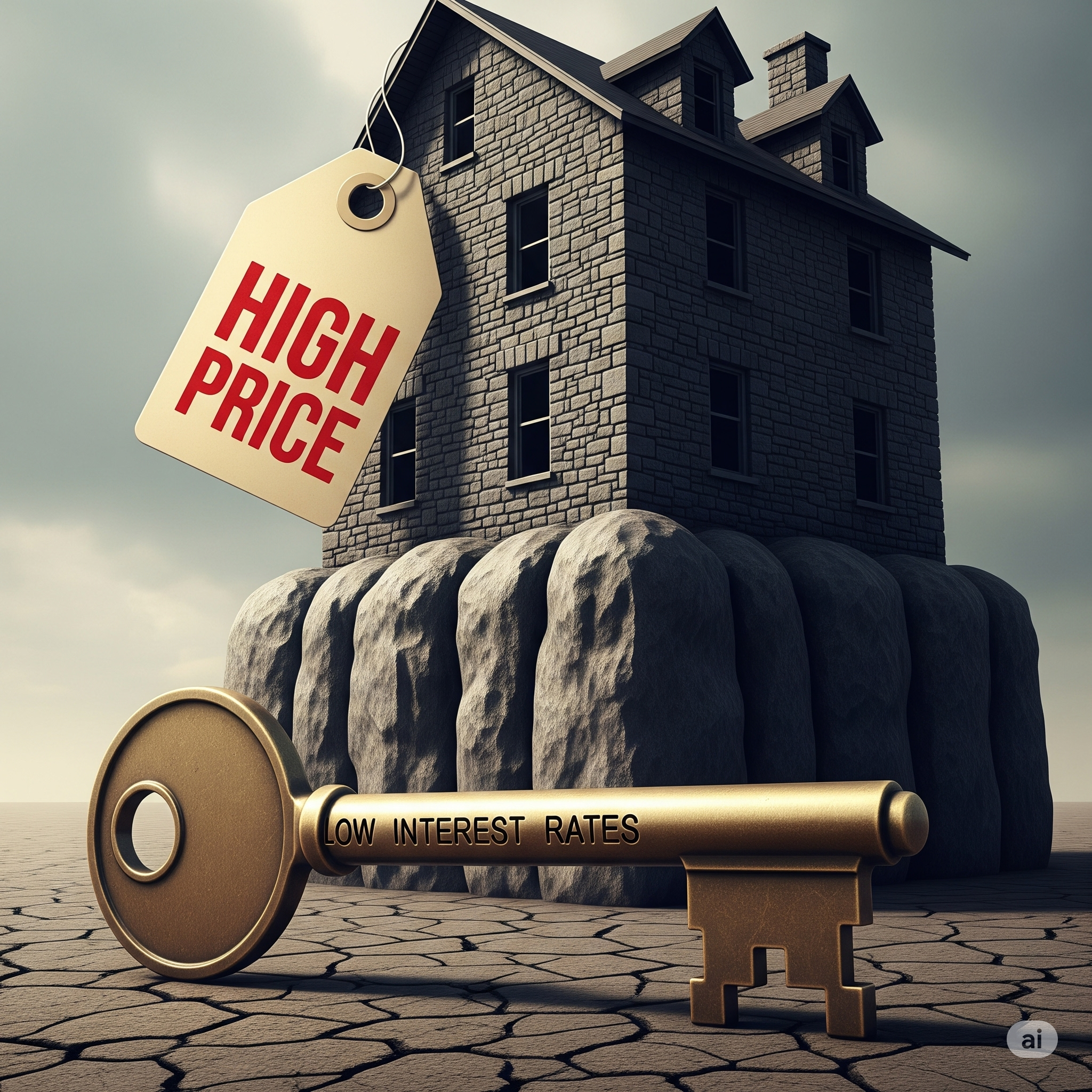
NASHVILLE, TN—From the rolling hills of Middle Tennessee to the bustling streets of Lower Manhattan, the U.S. housing market is gripped by an affordability crisis, and the problem is far more stubborn than many realize. While the daily headlines often focus on the ebb and flow of mortgage rates, a closer look reveals that the real anchor holding the market in place is something much bigger and more profound: persistently high home prices.
We see it every day here in Nashville. A once-affordable city is now a magnet for both new residents and institutional investors, driving prices to dizzying new heights. It’s a microcosm of a national trend, where the core issue isn’t just the cost of borrowing money, but the astronomical price tag on the property itself. While a slight drop in mortgage rates might ease the pain of a monthly payment, it does little to address the fundamental imbalance between what homes cost and what the average American earns. It’s a classic case of mistaken identity; we’re pointing fingers at the symptom (high rates) while the disease (inflated prices) rages on.
The Price Problem: The Math Behind the Crisis
According to a recent Zillow analysis, the current market dynamic is so distorted that mortgage rates would need to plummet to around 4.43% to make the average home affordable for a typical buyer. That’s a massive drop from the current rates, which have hovered between 6.5% and 7%, and Zillow economic analyst Anushna Prakash rightly deemed such a decline “unrealistic.” But the analysis goes even further, suggesting a truly shocking revelation: even if mortgage rates were to miraculously drop to 0%, homes in several major metropolitan areas—including New York, Los Angeles, Miami, San Francisco, San Diego, and San Jose—would still be financially out of reach for the average family.
This astonishing fact highlights a critical truth: high home prices are the “bigger hurdle.” The financial burden isn’t just the interest paid over 30 years; it’s the upfront capital required for a down payment and closing costs. For instance, even with a 0% mortgage, a home costing over a million dollars would still demand a down payment of at least $200,000 for a standard 20% down payment. And that’s just the beginning. Property taxes, insurance, and maintenance costs are all tied to the home’s value, meaning a high price tag creates a ripple effect of unaffordability that a low interest rate cannot fully solve. As Michelle Griffith, a New York-based luxury real-estate broker, told Fortune, “A small shift in rates doesn’t suddenly make that million-dollar apartment feel attainable.”
This pricing problem is a direct result of the past few years. Between May 2020 and May 2025, the Case-Shiller Home Price Index, a widely used measure of U.S. residential real estate prices, surged by over 51%. This meteoric rise has fundamentally altered the financial landscape for aspiring homeowners.
The “Rate Lock-in” Effect: A Market Frozen in Time
The affordability crisis is compounded by a severe lack of inventory, a direct consequence of what has been dubbed the “rate lock-in” effect. During the pandemic, millions of Americans, including many here in Nashville, took advantage of sub-3% mortgage rates. Now, as the Federal Reserve has aggressively hiked rates to combat inflation, those same homeowners are essentially trapped.
The math is a powerful disincentive to sell. A homeowner with a $300,000 mortgage at a 2.8% rate has a monthly principal and interest payment of roughly $1,238. To move up to a $500,000 home and finance the full amount at a 7% rate, their new payment would skyrocket to about $3,326, an increase of over 160%. . The incentive to stay put is overwhelming, and this reluctance to sell has choked the supply of homes on the market.
This phenomenon is particularly detrimental to first-time homebuyers and young families. With a limited number of starter homes available, they are forced to compete in a high-demand market with limited options, driving up prices even further. This isn’t just a market problem; it’s a societal one, preventing a new generation from building wealth through homeownership, which has historically been a cornerstone of the American Dream.
The New Players: Institutional Investors and “Build-to-Rent”
The housing crisis isn’t solely a result of market dynamics and homeowner behavior. A new, powerful force has entered the arena: institutional investors. In high-growth areas like Nashville, large private equity firms and investment companies have been aggressively buying up single-family homes, often paying in cash and outbidding individual buyers. They turn these properties into rentals, which provides a steady return but further shrinks the available supply for traditional homebuyers.
This shift has given rise to the “build-to-rent” community, where entire subdivisions are constructed with the explicit purpose of being rented out by a corporate entity. This trend, while providing more rental options, fundamentally changes the character of a neighborhood and limits opportunities for homeownership. It transforms a community into an investment portfolio, where the goal is profit maximization, not fostering a stable, long-term residential base.
The Income Gap: A Tale of Two Economies
The most staggering truth at the heart of this crisis is the growing chasm between what a home costs and what an average person earns. A 2024 report from the U.S. Department of the Treasury found that both rents and home prices have been rising far faster than incomes across most of the country. According to Realtor.com, a household now needs to earn more than a six-figure salary to afford a median-priced home, but the average U.S. salary is only slightly more than half of that.
This isn’t just about affordability; it’s about a fundamental decoupling of the housing market from the real economy. For decades, a typical household could reasonably expect to purchase a home, but that dream has been systematically eroded. This has created a new class of perpetually renting households, who are unable to save for a down payment while spending a disproportionate amount of their income on rent. This income-to-price disparity is a ticking time bomb, threatening long-term economic stability and exacerbating social inequality.

Nashville’s Unique Squeeze: The Cost of Popularity
Here in Nashville, we feel this on a personal level. The “It City” status we’ve earned has come at a steep price. Our vibrant music scene, thriving job market, and lack of a state income tax have made us a prime destination for out-of-state buyers. While this growth has been good for the local economy, it has also created a perfect storm for the housing market.
Developers are building at a rapid pace, but much of the new construction is either luxury condos or single-family homes priced well above the median. The demand for entry-level and middle-income housing still far outstrips the supply. We also face zoning challenges and high material costs that make it difficult for builders to create affordable homes profitably. The result is a housing market that serves the wealthy and the institutional investor, while leaving local teachers, nurses, and artists scrambling for a place to live.
The Path Forward: More Than Just a Rate Cut
Tipping one scale doesn’t necessarily fix the housing affordability problem. While lower mortgage rates would certainly help, they are not the magic bullet everyone hopes for. The problem is multi-faceted and requires a multi-pronged solution that goes beyond the Federal Reserve’s interest rate policy.
Potential solutions could include:
- Increasing Affordable Housing Supply: Policymakers could offer incentives for developers to build more lower- and middle-income homes, or streamline zoning and permitting processes to reduce construction costs and time.
- Addressing Investor Activity: Some states are exploring ways to limit the ability of large corporations to purchase single-family homes, protecting the market for individual buyers.
- Targeted Assistance Programs: New programs could be created to provide down payment assistance or low-interest loans specifically for first-time homebuyers and essential workers.
The current housing crisis is a complex puzzle, with high prices, low inventory, and rising rates all fitting together to create a difficult picture for homebuyers. While the dream of homeownership may feel distant for many, understanding the root causes of the problem is the first step toward finding a lasting solution. From Nashville to Orange County, the conversation is shifting, and the focus is finally where it should be: on the staggering price of a home itself.
Here at Shop Rates, we understand the unique pressures facing homebuyers, especially those of us here in Nashville and across the country. Our local roots give us a unique perspective on these national trends, and our nationwide lending platform is designed to help you find the best possible financial path forward. We invite you to connect with us to explore how a tailored lending solution can help you confidently navigate this complex market and find your way home.


